Introduction
In today’s fast-moving business environment, organizations don’t fail because of a lack of strategy; they fail because of poor execution, weak collaboration, and siloed thinking.
Most leadership development programs focus on theory. They explain what leaders should do.
But real leadership is tested under pressure when information is incomplete, resources are limited, and decisions have consequences.
This is exactly where The Quest for King Solomon’s Mines (KSM) stands apart.
KSM is not a workshop.
It is an immersive experiential learning simulation designed to transform how teams think, collaborate, and perform, making it one of the most powerful solutions among modern experiential learning companies and leadership training companies.
What is The Quest for King Solomon’s Mines (KSM)?
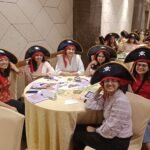
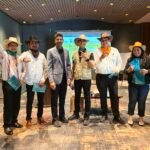
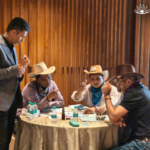
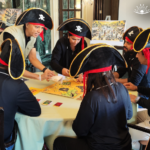
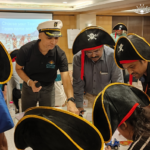
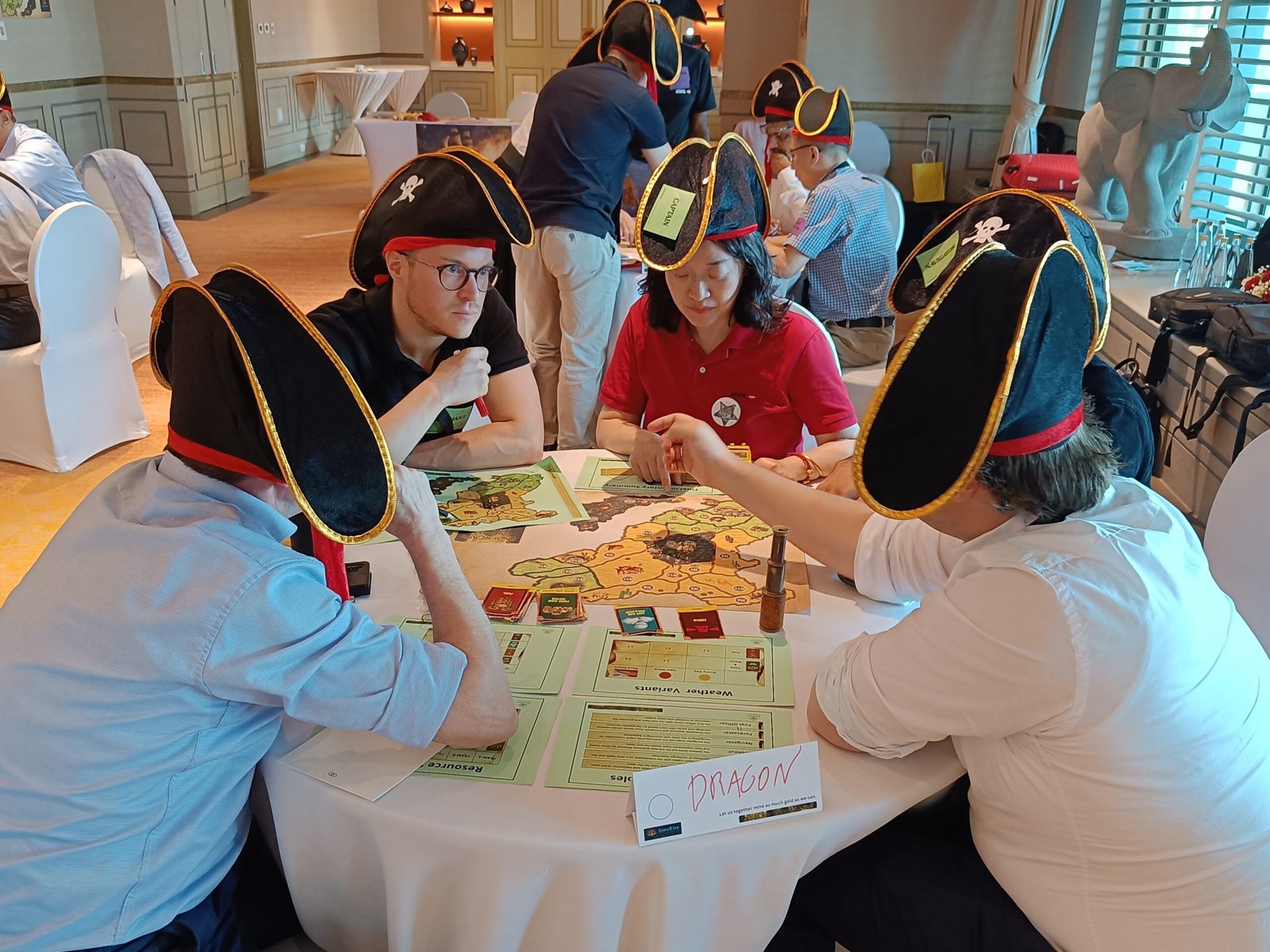
KSM is a high-impact, in-person business simulation where participants are placed in a high-stakes expedition.
The mission is simple, but execution is not:
- Travel across 23 unpredictable regions
- Manage limited resources
- Navigate risks, uncertainty, and time pressure
- Reach King Solomon’s Mines
- Extract maximum gold
- Return safely to base camp
All within 16 simulated days.
But beneath this storyline lies a deeper objective:
To expose real workplace behaviors and transform them through experience.
The Real Problem KSM Solves
Across organizations, leaders repeatedly face the same challenges:
- Teams work in silos
- People don’t ask for help
- Departments compete instead of collaborating
- Decisions are made with a survival mindset
- Teams play it safe
- Teams showcase a survival mindset
- Teams don’t take up ownership and Accountability
- Resources are hoarded, not shared
These aren’t capability issues.
They are behavioral and cultural breakdowns.
KSM is designed specifically to address these.
How KSM Transforms Leadership Behavior
1. From Silos to Enterprise Thinking
In the simulation, teams initially operate independently.
Very quickly, they realize:
- Winning individually does not guarantee organizational success
- Lack of collaboration leads to collective failure
This creates a powerful shift:
From “my team” → to “our organization.”
2. From Playing Safe to Making Strategic Decisions
Participants must constantly decide:
- Should we take risks or conserve resources?
- Do we push forward or pivot?
These decisions are made under pressure, not in theory.
Result:
Leaders build confidence in decision-making under uncertainty
3. From Isolation to Collaboration Under Pressure
At critical moments, teams must:
- Trade resources
- Share information
- Ask for help
What feels uncomfortable in the workplace becomes necessary in the simulation.
Result:
Collaboration becomes a survival strategy. Collaboration becomes a competitive edge.
4. From Survival Mindset to Growth Mindset
Many teams begin cautiously, focusing on “not losing.”
But as the simulation progresses, they see:
- Playing safe limits outcomes
- Bold, calculated moves create breakthroughs
Result:
A shift toward growth-oriented thinking and proactive action
What Participants Experience During KSM
The simulation is designed to mirror real business complexity:
- Unpredictable environments (weather, terrain, risks)
- Limited resources requiring prioritization
- Time pressure driving urgency
- Inter-team dependencies are forcing collaboration
Participants:
- Make real-time strategic decisions
- Experience consequences immediately
- Adapt continuously
- Reflect deeply during debriefs
This is why experiential learning is powerful, because people don’t just learn, they experience and internalize.
The Power of Debriefing: Where Real Learning Happens
KSM’s true impact emerges during the facilitated debrief.
This is where participants reflect on:
- Why did we fail despite strong individual performance?
- Why didn’t we ask for help earlier?
- How did our decisions impact others?
The realization is often uncomfortable but transformative.
KSM acts as a mirror to real organizational behavior.
Key Outcomes Organizations Achieve with KSM
Organizations that implement KSM consistently report:
Break the Walls
Teams understand how to eliminate silos and collaborate effectively
Do More With Less
Improved ability to optimize existing resources
Decide with Clarity
Stronger decision-making under pressure
Ask for Help
A shift toward open communication and support-seeking behavior
Lead with Vision
Movement from short-term survival to long-term growth thinking
Implement Fast
Insights that are immediately applicable at work
Why KSM Stands Out Among Experiential Learning Solutions
Many training programs simulate engagement.
KSM simulates real business pressure.
What makes it different:
- High-energy, immersive design
- Real-time decision consequences
- Peer-driven learning (not lecture-based)
- Scalable for 20 to 300+ participants
- Applicable across leadership levels
This is why leading organizations like EY, Deloitte, JSW, Johnson Controls, Sherwood Lumber, Agfa Radiology, Tata Communications, Adani, Piramal, Coca-Cola, HCCB, Dr. Reddy’s, HSBC, Jade Global, Cognizant, Tata Power, and Siegwerk have leveraged KSM to transform team dynamics.
Who is KSM Ideal For?
KSM is designed for:
- Leadership Teams
- Mid to Senior Management
- Cross-functional Teams
- High-potential talent groups
Whether your goal is:
- Breaking silos
- Improving collaboration
- Strengthening decision-making
- Building alignment
KSM delivers measurable impact.
How the Simulation Flows
The experience is structured yet dynamic:
- Briefing Session – Context, objectives, and rules
- Strategic Planning – Teams align on approach
- Interactive Gameplay – Real-time decision-making
- Facilitated Debrief – Reflection and learning transfer
Duration: ~2.5 hours (gameplay)
Format: In-person
Group Size: 20 to 300+ participants
Why Experiential Learning Works Better Than Traditional Training
Traditional training:
- Tells people what to do
Experiential learning:
- Forces people to experience consequences
This leads to:
- Higher retention
- Stronger behavioral change
- Faster application
KSM embodies this approach, making it a benchmark solution among leadership training companies globally.
Final Thoughts: From Insight to Transformation
Organizations don’t change through presentations.
They change through shared experiences that challenge assumptions.
The Quest for King Solomon’s Mines is not just a simulation; it’s a catalyst for transformation.
It helps teams:
- See their real behaviors
- Understand their impact
- Shift how they think and act
And most importantly, move from working in silos to winning as one team.
Ready to Transform Your Leadership Teams?
Explore how experiential learning can unlock your team’s full potential by reaching out to us at marketing@simurise.com or calling Annie at +91 9082381193.
Let’s help your teams move beyond silos, make better decisions, and drive real business outcomes.