There has been an evolution in the conversation about the topic of women in leadership. The intent is clear. Evidence supports it. Many organizations know that highly gender-diverse leaders will lead to better performance and innovation while building stronger organizations.
Unfortunately, progress has been inconsistent.
Women lack access to opportunity, confidence, visibility, and access rather than ability. Women don’t lack potential; they need access to environments that will enable them to realize their potential.
In 2026, female leaders must be actively and interactively developed as part of their leadership journey and should not be a result of delivering passive, theoretical material. Female leaders must experience growth through intentional design within this experience.
Why Women’s Leadership Development Requires a Different Approach
Although the leadership fundamentals apply to everyone, women often experience unique barriers, such as structural and psychological barriers that other standard programs do not address. There is still much work to be done despite the progress made by many women who continue to deal with many challenges, including:
- Gender Bias and Microaggression
- Imposter Syndrome
- Limited Access to Sponsorships and Senior Networks
- Increased Pressure from Work/Life Integration Disproportionately Affecting Career Progression
These barriers cannot be resolved through generic traditional classroom Workshops. They require a safe space to reflect and build skills through lived experiences, as well as a learning environment that validates ambition rather than challenges it. Experiential Leadership Learning offers that environment.
What Makes Experiential Leadership Learning Powerful
Listening does not create Leadership; experience creates Leadership.
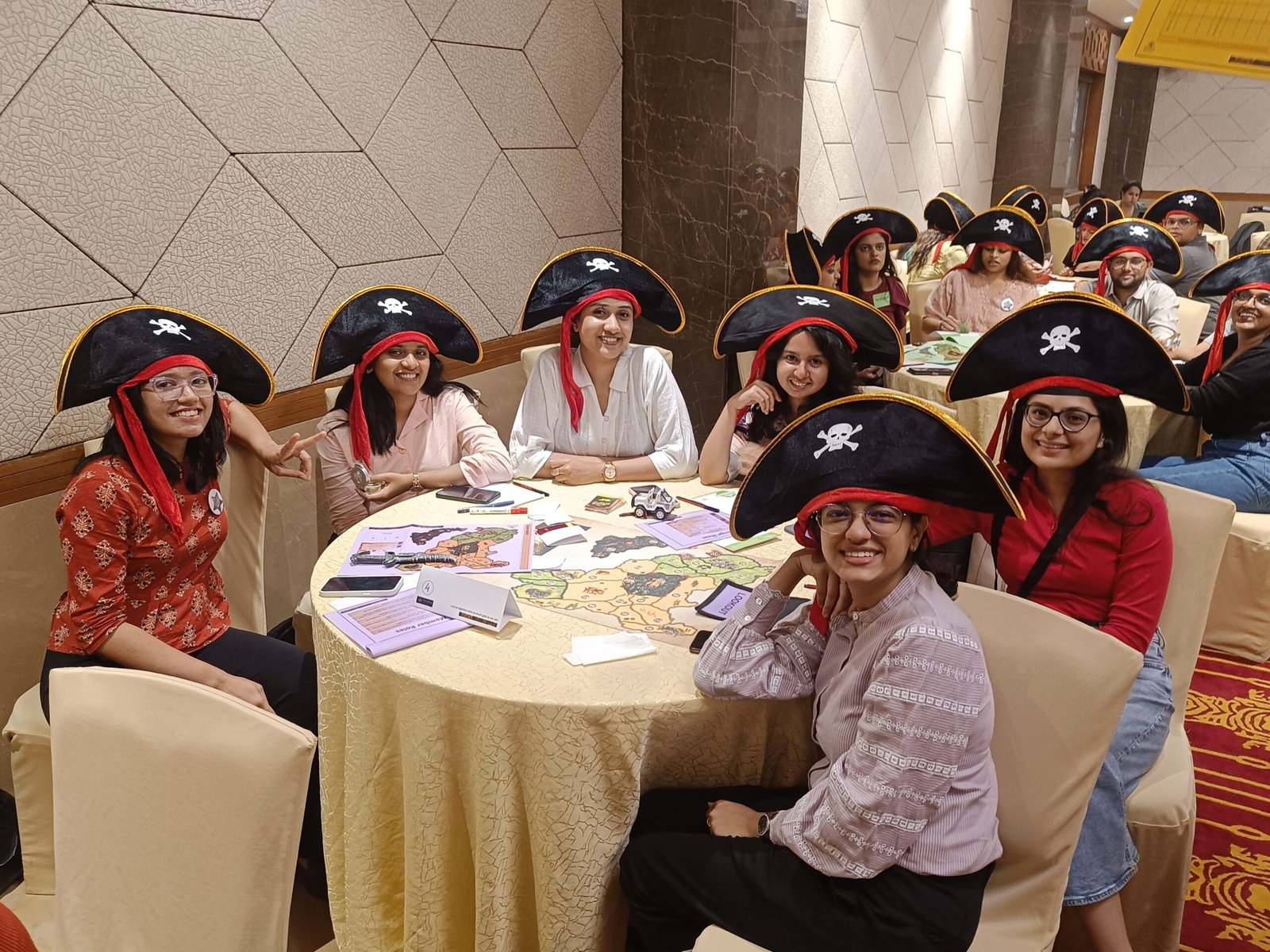
Experiential scenario-based learning provides a way to move from theory into action. Participants do not talk about Leadership concepts; they engage with them in real time, in an appropriate business context.
Programs that use effective interactivity provide the following:
- Scenario-based simulations of workplace issues
- Role-play exercises that develop comfort in having difficult conversations
- Real-time feedback loops that confirm the validity of the decisions made
- Collaboration and learning from your peers
This approach creates a supportive psychological environment where women can practice, try new things, and develop their Leadership style without any repercussions in the real world.
When women role-play negotiations, strategic decisions, or conflict conversations in immersive environments, they change. They earn confidence through experience instead of just support.
The change is not only skill development; it is a change in who they are.
Core Capabilities Women Leaders Must Build in 2026
More than just possessive leadership qualities are required for future leaders; rather, effective leaders should be influential, adaptable, and strategically clear. Women are being empowered through Experiential Leadership Learning that will aid them in building these essential capabilities.
Developing executive presence and confident communication skills
Women who excel tend not to express themselves assertively in situations where their ideas or viewpoints can be rejected or discredited, especially in environments where interruptions occur frequently or biases exist.
As such, training must include:
- Communicating assertively rather than overcompensating
- Owning their own space within the context of a conversation
- Speaking with authority and clarity
- Mastering the art of handling interruptions and bias constructively
It should be emphasized that confidence does not equal loudness; instead, it equals ground authority.
Strategic Thinking and Enterprise Perspective
Thinking about operational excellence is not enough; women’s leadership requires thinking about the impact their strategic decisions can have on the whole enterprise. With that foresight, women leaders will be able to anticipate long-term implications by understanding enterprise-wide strategic goals and how their decisions will impact the overall business.
To help women leaders develop this type of foresight, we will use Experiential Leadership Learning and business simulations that create constraints on resources, require trade-offs between different departments, and deal with ambiguous situations.
At all levels of leadership, negotiation plays a key role on either side of the table, regardless of whether you negotiate growth in the organization or high-level strategic decisions between companies. However, women leaders often experience unique barriers and biases during negotiations.
Women leaders will benefit from stronger Learning programs that focus on the following:
- Frameworks for strategic thinking
- Techniques for a growth mindset
- Utilizing emotional intelligence during conflicts
- Balancing collaboration with firmness
Influencing people is not about dominating; it is about being credible and clear.
Women leaders demonstrate that they are empathetic and community-based. When these traits are intentionally developed, they become a major source of strategic strength in women’s leadership.
Experiential Leadership Learning should support the following:
- Active listening
- Empowering your team
- Creating psychological safety
- Engagement with a diverse set of perspectives
- Inclusive leadership encourages engagement, creativity, and retention.
Networking as a Leadership Strategy
Professional visibility is an essential component of leadership development; building networks, internally and externally, is critical to that development and intentional to accomplish this goal for women who need to:
- Strengthen and develop peer alliances;
- Build and establish mentoring relationships;
- Become a part of learning communities.
- Seek sponsorships at senior levels.
Networking isn’t about self-promotion but about developing your own career as a work of art.
Designing a High-Impact Women’s Leadership Program
A leadership program developed for women on strength does not occur by chance; it requires careful design and alignment with the organization’s strategy.
Achieving Business Results through Goal Alignment.
Measurable goals such as increased female leaders, improvement in confidence to make strategic decisions, and improved ability to influence other leaders in a functional area should be identified.
Leadership development should not only be defined as an initiative but also as an ongoing performance strategy for the organization.
Mentoring & Sponsorship Ecosystem
Mentoring gives advice; sponsorship provides an opportunity to accomplish that advice.
By matching women with senior leaders in their company, women gain exposure, confidence, and insight into how to navigate their careers. When women can identify with other women who are senior leaders, that goal becomes more real.
Blended Learning for Deeper Impact
Programs That Blend Learning for Greater Effectiveness
Effective blended learning programs include:
- Interactive simulations
- Offline role-play
- Live coaching
Webinars with exercises to reflect on and revise actions
The advantages of a blended approach in learning include an increase in retention, engagement, and practical application, as well as flexibility and scalability.
Addressing Bias Head-On
Merely ignoring an issue does not remove it; similarly, when organisations choose not to address bias openly in the workplace, microaggressions, and implicit bias continue to be persistent societal problems.
Women can be given the tools necessary to:
- Recognise bias
- Respond constructively
- Keep their voice and visibility
- Support other women
- To create resilience and strength through association.
Ongoing Measurement & Feedback
Leadership development isn’t just about creating a one-time development opportunity; developing leaders and building their competencies requires continuous refinement of how organisations measure their effectiveness in developing leaders.
Tracking metrics like:
- High Potential movement
- Leadership readiness metrics
- Leadership ability observations; and
- Role readiness
Will help ensure that leadership programs will continue to meet the evolving needs of the organisation.
Why Organizations Must Prioritize Women’s Leadership Now
Supporting female leadership is not only the right thing to do from a social standpoint, it’s also a good business decision. So many studies show that companies with more gender-diverse senior leaders perform better than their peers on measures like innovation and profitability because having multiple points of view positively affects decisions, fosters creativity, and builds trust with stakeholders.
In addition to strong performance results, female leaders also create positive results through:
- Retention of employees.
- Reputation of the business.
- Attraction for prospective talent.
- Inclusive company culture.
When women are recognized, listened to, and valued, they raise not only themselves but everyone else, including their teams and businesses.
From Capability to Confidence to Influence
Women’s Experiential Leadership Learning ultimately revolves around the journey of developing. Their journey will include the ability to convert their self-doubt to strategic confidence, voice to influence, and potential into visible leadership.
When they have access to the right tools, immersive learning experiences, mentorship, and organizational support, women will not only shatter glass ceilings but will also redesign how these ceilings are constructed.
In 2026 and beyond, organizations that commit to developing women with interactive leadership will not only eliminate representation gaps, but they will also unleash innovation, increase performance, and strengthen cultural resiliency.
Leadership equality is not a passing trend; it is a business advantage. If your organization is ready to design an Experiential women’s leadership journey that builds confidence, strengthens influence, and drives measurable business impact, connect with us at marketing@simurise.com or call Annie at +91 9082381193. Let’s empower the next generation of women leaders together.