Introduction
The workplace is changing faster than job descriptions can keep up.
Artificial intelligence is automating routine tasks. Digital tools are reshaping workflows. Hybrid teams are becoming normal. Customer expectations are shifting constantly. Business models that once seemed stable are being challenged by new technologies, competitors, and ways of working.
In this environment, organizations can no longer depend only on technical competence, past experience, or formal education. Those still matter, but they are no longer enough. What truly separates future-ready organizations from the rest is their ability to develop people who can think critically, solve complex problems, adapt quickly, collaborate across boundaries, and make sound decisions in uncertain situations.
These are higher-order future-ready skills.
They are not just “nice-to-have” capabilities for leadership programs. They are strategic business capabilities. They determine whether teams can respond to disruption, use technology intelligently, innovate under pressure, and continue delivering value when the environment changes.
The question for organizations is no longer, “Do our people have the skills for today?” The more important question is, “Are we developing the capabilities they will need tomorrow?”
What Are Future-Ready Skills?
Future-ready skills are the capabilities that help employees, managers, and leaders stay effective as work evolves. They allow people to respond to new problems, learn new tools, work across functions, and make decisions in situations where there is no perfect playbook.
Some future-ready skills are digital and technical, such as AI literacy, data literacy, cybersecurity awareness, and comfort with digital platforms. But the most critical skills are often higher-order human capabilities: analytical thinking, learning agility, emotional intelligence, systems thinking, creativity, ethical reasoning, and change agility.
These skills matter because the future of work is not only technological. It is also behavioral, cultural, and strategic.
A person may know how to use a tool, but can they question the output? Can they interpret data meaningfully? Can they collaborate with others when priorities conflict? Can they adapt when the plan changes? Can they make decisions when information is incomplete?
That is where future-ready capability becomes visible.
Why Higher-Order Skills Have Become a Strategic Imperative
The half-life of skills is shrinking. Employees who rely only on what they learned years ago may find themselves unprepared for evolving expectations. Your shared research highlights that organizations are facing widening capability gaps in areas such as AI, analytics, communication, leadership, cybersecurity, and collaboration, making future-ready skill development a strategic priority rather than a routine L&D activity.
For executives and L&D leaders, the challenge is twofold. First, organizations must build foundational skills that remain relevant despite change. Second, they must identify emerging capabilities that will unlock future growth, resilience, and innovation.
This is why future-ready skill development cannot be limited to annual training calendars. It must become part of the workforce strategy. Without it, organizations risk slower decision-making, weak innovation, operational inefficiencies, rising hiring costs, and an overdependence on external talent.
The most resilient organizations will be those that develop people who can continuously learn, unlearn, and relearn.
The Three Categories of Future-Ready Capability
Future-ready skills can be understood across three interconnected dimensions: cognitive, digital, and behavioral. Each dimension is important, but the real advantage comes when they work together.
1. Cognitive and Analytical Skills
Cognitive skills are the thinking capabilities that help people make sense of complexity. In a world where AI can handle routine work, humans are increasingly expected to solve ambiguous, high-value problems.
Critical thinking and complex problem-solving sit at the center of this category. These skills help employees evaluate information objectively, identify root causes, avoid assumptions, and make better judgments. Organizations need people who can ask, “What is really happening here?” before rushing toward solutions.
Systems thinking is equally important. Business functions are more interconnected than ever. A sales decision affects the supply chain. A technology change affects customer experience. A cost-saving decision affects culture. Systems thinkers can see the larger pattern and anticipate ripple effects before they become problems.
Data literacy is another non-negotiable capability. Employees do not need to become data scientists, but they must be able to read data, identify trends, ask better questions, and use insights to strengthen decisions. In a world flooded with dashboards and AI-generated outputs, the ability to interpret information intelligently becomes a competitive advantage.
2. Digital and Technical Fluency
Digital fluency is no longer restricted to technology teams. Every function now depends on digital platforms, automation, analytics, cloud systems, and increasingly, AI-enabled tools.
AI literacy is becoming one of the most important workplace capabilities. Employees must understand how AI works, where it helps, where it can fail, and when human judgment must override machine-generated recommendations. The future-ready employee is not threatened by AI; they know how to collaborate with it responsibly.
Cybersecurity awareness is also becoming universal. Every employee is now a potential risk point or protective layer. Secure digital behavior, data privacy awareness, and responsible tool usage are essential across roles.
Low-code, automation, and software fluency are also gaining importance. As work becomes more digital, employees who can automate repetitive tasks, improve workflows, and use digital tools confidently will contribute more effectively to productivity and innovation.
3. Behavioral and Interpersonal Skills
The more digital work becomes, the more human skills matter.
Adaptability and change agility are essential because employees will continue to face shifting roles, new technologies, hybrid work realities, and evolving business models. Future-ready people do not freeze when things change. They adjust, learn, and keep moving.
Collaboration and cross-functional communication are equally critical. Distributed teams must work across geographies, cultures, and functions. This requires clarity, trust, listening, and the ability to align people who may not report to the same leader.
Creativity and innovation remain deeply human strengths. AI can generate options, but human imagination identifies meaning, possibility, and context. Organizations that want to differentiate must build teams that can think beyond templates.
Emotional intelligence is another differentiator. It supports conflict resolution, leadership, psychological safety, and team cohesion. As transactional tasks become automated, the ability to understand people, manage emotions, and influence constructively becomes even more valuable.
Finally, ethical reasoning and responsible decision-making are becoming central to leadership. AI governance, data privacy, sustainability, and social responsibility require people who can evaluate consequences beyond immediate gains.
Learning Agility: The Skill Behind All Skills
If there is one capability that holds all future-ready skills together, it is learning agility.
Learning agility is the ability and willingness to learn from experience and apply that learning in new situations. Your source material describes it as a mindset and collection of practices that help leaders continue developing strategies for increasingly complex problems.
An agile learner is not someone who knows everything. It is someone who is willing to learn what the situation demands. They are curious, flexible, self-aware, resourceful, and reflective. They seek feedback, learn from mistakes, and do not assume that yesterday’s solution will solve tomorrow’s problem.
This is particularly important because future-ready skills will not remain fixed. The skills required today will evolve again. Organizations that build learning agility are not just preparing people for one future; they are preparing them for continuous change.
Why Organizations Must Move from Jobs to Skills
Traditional workforce planning often begins with job titles. But job titles are becoming less reliable as work evolves. The same role may require different capabilities in six months.
A skills-first approach is more powerful because it helps organizations understand what people can actually do, what capabilities are missing, and how talent can move across roles. Your source material highlights that building a future-ready workforce begins by mapping skills to business priorities, not merely to job titles.
This shift has major implications for hiring, development, and internal mobility. Instead of asking only, “Who has done this job before?” organizations begin asking, “Who has the capabilities to succeed in this evolving environment?”
That question creates access to a wider talent pool, supports fairer development, and reduces dependency on external hiring.
How Organizations Can Develop Future-Ready Skills
Building future-ready skills requires a deliberate learning ecosystem.
The first step is skill mapping. Organizations must identify the skills that matter most to their business strategy. A manufacturing company may prioritize digital operations, collaboration, and productivity. A technology firm may focus on innovation, data literacy, and human-AI collaboration. A sales-led organization may need strategic thinking, influence, and decision-making under pressure.
The second step is assessment. Without a baseline, L&D teams cannot know where to begin. Assessments, simulations, feedback tools, and manager inputs can help identify strengths and gaps.
The third step is experiential development. Higher-order skills cannot be built only through content. People need to practice decision-making, collaboration, problem-solving, and adaptability in realistic environments.
The fourth step is reinforcement. Skills improve when people apply them repeatedly, receive feedback, reflect, and refine their approach. Learning journeys, coaching, peer discussions, and action-learning projects help convert learning into behavior.
Finally, organizations must measure outcomes. Participation is not enough. L&D teams must track skill progression, behavior change, internal mobility, performance improvement, and business impact. Your shared material notes that many organizations struggle to quantify L&D impact, making robust measurement practices essential for future development strategies.
The Role of Experiential Learning in Higher-Order Skill Development
Higher-order skills are difficult to teach through lectures because they are not purely intellectual. They show up in action.
A leader may understand collaboration in principle, but under pressure, they may still withhold information. A manager may know decision-making frameworks, but when data is incomplete, they may hesitate. A team may talk about innovation, but when risk appears, they may play it safe.
Experiential learning brings these behaviors to the surface.
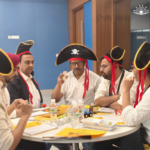
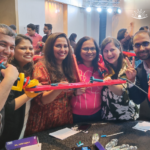
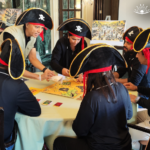
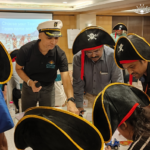
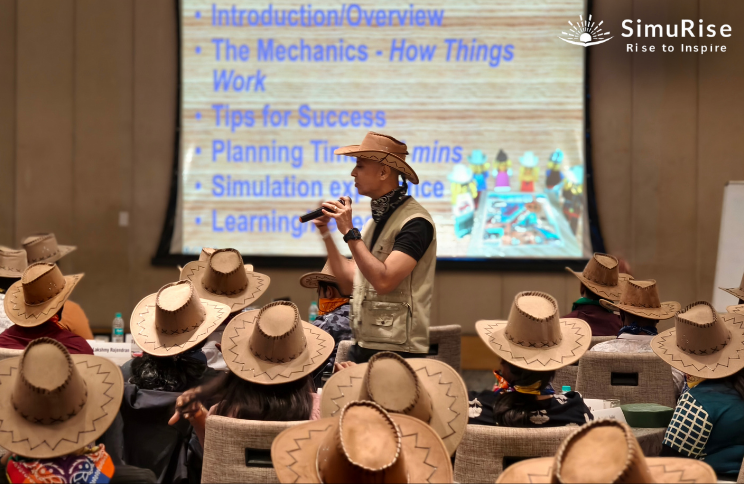
Through business simulations, role-based challenges, game-based learning, and facilitated reflection, participants experience complexity in a safe environment. They make decisions, face consequences, observe patterns, and reflect on what they would do differently.
This is where real skill development begins. Participants do not just learn about future-ready skills; they practice them. They experience what it means to think strategically, collaborate under pressure, adapt to uncertainty, and solve problems with limited resources.
How SimuRise Helps Build Future-Ready Teams
At SimuRise, we believe future-ready skills are not built by telling people what to do. They are built by creating experiences that let people see how they think, decide, collaborate, and respond under pressure.
Our experiential learning interventions and business simulations help organizations develop higher-order capabilities such as strategic thinking, complex problem-solving, decision-making, collaboration, change agility, growth mindset, and ownership.
Through simulations like The Quest for King Solomon’s Mines, The Search for the Lost Dutchman’s Gold Mine, FreshBiz, Diamonds of Amazonia, and Square Wheels to Round Wheels, participants experience real workplace dynamics in a safe, engaging environment. They learn by doing, reflect deeply, and leave with practical insights they can apply back at work.
This is especially valuable for organizations that want to move beyond traditional training and create future-ready leaders, managers, and teams who can perform in uncertain business conditions.
Conclusion: The Future-Ready Workforce Will Be Built, Not Found
The future of work will not reward organizations that simply hire for current competence. It will reward organizations that continuously build capability.
Technical skills will keep changing. Tools will evolve. Job roles will shift. But higher-order skills such as critical thinking, learning agility, adaptability, collaboration, emotional intelligence, creativity, and ethical decision-making will remain central to human performance.
Organizations that invest in these skills today will be better prepared for tomorrow’s uncertainty. They will make better decisions, adapt faster, innovate more confidently, and build stronger leadership pipelines.
Future-ready teams are not created by chance. They are built intentionally through experience, reflection, practice, and reinforcement.
If you want to develop critical higher-order future-ready skills in your leaders, managers, and teams through experiential learning and business simulations, reach out to us at marketing@simurise.com or call Annie at +91 9082381193. SimuRise can help your people build the mindsets and capabilities needed to thrive in the new world of work.