Introduction
Many leaders know this feeling too well.
You delegate the task. You explain the requirement. You ask the team to take ownership. You encourage initiative. But somehow, everything still returns to your desk.
- You are the one catching mistakes.
- You are the one following up.
- You are the one making the final decision.
- You are the one stepping in at the last minute.
- You are the one carrying the mental load.
At first, it may look like a team problem. It may feel like people do not care enough, think deeply enough, or take responsibility seriously enough. But in many cases, low ownership is not a motivation problem. It is a problem of leadership, systems, and culture.
Teams do not take ownership just because leaders ask for it. They take ownership when the right conditions are in place.
Ownership grows when people have clarity, trust, decision space, psychological safety, capability, and a clear connection to the bigger picture. When these conditions are missing, people learn to wait, check, escalate, and play safe.
This blog explores why teams do not take ownership and what leaders can do to build a culture where people step up, think ahead, and take responsibility for outcomes.
What Does Ownership Really Mean at Work?
Ownership at work means taking responsibility not just for completing a task, but for delivering the outcome behind that task. It means thinking ahead, solving problems proactively, asking for help when needed, making decisions within agreed boundaries, and following through without constant reminders. Leaders become overloaded because they are constantly verifying, correcting, following up, and fixing work that should have been owned at the team level. They find it difficult to step back because they believe that if they do not catch the issue, no one else will.
Decisions take longer because everything requires multiple levels of authorization. Team members become dependent on direction. Projects start to lose traction. Customers have to wait. Senior leaders have to spend too much time resolving issues that should have been handled lower down in the organization.
Over the long haul, lack of ownership creates frustration for both parties: leaders feel unsupported. Team members feel micromanaged. Managers feel fatigued. Employees feel confused. Businesses become slow to operate.
This is not how to lead; this is a formula for burnout.
The Hidden Cost of Low Ownership
Missing ownership impacts the entire organization, not just defined timelines/budgets. Leaders become overloaded because they are continuously verifying, fixing, and chasing; managers become human QA systems. They have no opportunity to stop, even if they could,d because they know that if they didn’t catch it, no one else would.
Decisions take longer because everything requires multiple levels of authorization. Team members become dependent on direction. Projects start to lose traction. Customers have to wait. Senior leaders have to spend too much time resolving issues that should have been handled lower down in the organization.
Over the long haul, lack of ownership creates frustration for both parties: leaders feel unsupported. Team members feel micromanaged. Managers feel fatigued. Employees feel confused. Businesses become slow to operate.
This is not how to lead; this is a formula for burnout.
Why Teams Don’t Take Ownership
Most employees do not intentionally avoid responsibility. In many cases, they have adapted to the way leadership and systems actually work.
Here are the most common reasons teams do not take ownership.
1. Leaders Step In Too Early
When leaders solve problems too quickly for teams, they take away teams’ ability to take ownership of results.
An example of this would be when the leader rewrites a proposal that does not look good to them, or sends out an email to a client without allowing their team member the opportunity to send it, or finishes up the presentation at night because it was not ready, or takes over a team member’s work before a mistake is made, etc.
While there may be some improvement in output performance, it sends a negative message about ownership, and the team learns, “this is not wholly mine; the leader is going to take my work away.”
By stepping in and correcting teams immediately for every little mistake, leaders discourage ownership, and teams wait on the leader to tell them what to do, as they are not given the opportunity to own their responsibilities, room to fail, think, decide, and recover.
2. Leaders Delegate Tasks, Not Outcomes
Leaders often believe they have “delegated ownership” but really are only delegating activity. For example, asking someone to do the same report you want from them on a weekly basis…is not really delegating ownership. No one in that instance would know they own that report. They would only know that they have to execute the report.
For instance, “Could you please send me this report by Friday?”…is not the same as saying “You own the weekly business performance update, and you will be responsible for ensuring the leadership team receives clear, accurate, and useful information each week (before the team meets).” The first is just a task; the second is an outcome.
When someone is assigned an outcome, they will take ownership of achieving it. If someone is given only a specific task, they will be able to execute only that task. If they are given an outcome, they will adopt a mindset of ownership over the output.
3. Decision Rights Are Unclear
While you expect your team members to take ownership, you cannot make all decisions without giving your direct reports the opportunity to make their own.
When leaders tell employees that they are owning this project, they are still reviewing, approving all decisions, changing all details, changing timelines, and participating in every significant conversation.
Given that ownership is not the same as supervised compliance, true ownership requires the ability to make independent decisions.
Employees need to be informed regarding the following:
1. The types of decisions they can make independently
2. The types of decisions that require employee consultation
3. The types of decisions that must be elevated to their supervisor
4. The types of risks that must be reported early
5. The types of activities in which their employees are free to test
If the employee does not possess clear decision-making rights, they will remain risk-averse, verify each decision, and await permission before taking ownership and accountability for their decisions.
4. Expectations Are Vague
Many teams will not take ownership of the work they are involved in if they are unsure what a good job will look like.
A confusing brief fosters reliance on the leader; clear expectations build confidence in team members to step up and take ownership.
When leaders fail to define, clarify, or communicate priorities, trade-offs, quality expectations, deadlines/timelines, decision-making criteria, and measures of success, team members have no choice but to use guesswork. Guessing means they will most likely choose the option that feels safest.
As a result of your team members relying on guesswork, they will overcheck their work, slow progress, and produce work that is technically complete but functionally ineffective.
To take ownership of a task, you must have clarity.
Before starting any work, you must clarify as to:
- What success means
- What is important
- What are acceptable trade-offs
- What is non-negotiable
- What is the expected outcome
- Who is responsible for what aspect of the task
Clarity will reduce fear and empower employees to take initiative.
5. Teams Do Not See the Bigger Picture
Understanding the purpose behind your work gives you a sense of ownership. Employees who only see individual tasks are more likely to approach their work as mere task-doers; therefore, when they identify larger purposes, such as customer impact, business priorities, and team attachment, they are more likely to act responsibly.
An employee working at the front line might view “updating records” in isolation and not feel any sense of ownership for this type of work. However, if they are made aware that having accurate records positively affects customer service by improving timeliness and quality and by guarding against lost revenue, this work will take on greater significance.
While a vision statement on the wall may convey the overall message and big picture to an organization, it should also be communicated in a relevant way and in relation to current issues. People want an understanding of:
How their actions affect customers;
- How their roles affect the success of the business;
- How their delays or mistakes affect others on other teams;
- Why their work is important at this time;
- What value does their sense of ownership add to the organization? When an employee sees the big picture, they are more inclined to have an impact on the organization through actions beyond their assigned roles.
6. The Culture Punishes Mistakes
Risk is associated with acceptance of ownership.
When individuals make choices, some of those decisions may be inaccurate (resulting in errors). Individuals who accept responsibility and take initiative may make mistakes, while others may question long-held beliefs or go against those in positions of authority.
When errors are penalized severely by the organization, employees tend to adopt conservative positions, seek permission before taking action, and defer to managers when making decisions.
Psychological safety is extremely important to encourage ownership behavior
Psychological safety does not mean there is no accountability; it means individuals can be open and honest about their work, including making mistakes or seeking assistance, without fear of humiliation.
If management responds negatively to employees who make errors by being overly critical or overcontrolling, employees will learn to avoid taking personal ownership and may be unwilling to develop innovative ideas. When management responds to errors as opportunities to learn, employees typically become more forthcoming in their thinking, decision-making, and actions.
7. Meetings Create Confusion Instead of Accountability
Meetings are intended to align people, clarify the action to take, and help make good decisions. However, many meetings fail to accomplish this.
- No agenda
- No decision-maker
- No ownership
- No follow-up
- No next steps
Instead of gaining clear direction from the meeting, participants often leave with a new list of tasks that is no clearer than when they arrived.
When meetings lack a clear design and process for ownership, people assume someone else is responsible for the outstanding issues. Decisions will not be made until someone takes on the responsibility. No follow-up actions will occur without direction from the meeting leader.
A structured meeting should provide clarity regarding:
- The purpose of the meeting
- The decision to be made
- The ownership of the decisions
- The next action to be undertaken
- The deadline for the completion of the action
- The support needed in order to complete the action
A well-structured meeting improves overall accountability for its outcomes.
8. Everyone Is Overwhelmed
To have ownership, you need mental capacity or bandwidth. If a team gets overwhelmed with work, they immediately go into survival mode and will only do urgent tasks or anything that presses them now, avoiding anything that requires much thought.
So when you are in this position, your initiative will drop. Your capacity to generate new ideas will be reduced. Thinking about a problem holistically is harder when you are just trying to finish your day.
Most leaders forget that their behavior sets the tone for their team, which is why their teams remain in survival mode. If the leader is always reacting to situations, putting out fires, working late, and feeling stressed, that is normal for their team.
To foster ownership, leaders must build people’s capacity by reducing noise, clarifying the most important projects, removing unnecessary work, and providing time to think.
If a team is always overloaded, then they cannot consistently take ownership at work.
9. Leaders Listen to Respond, Not to Understand
When team members feel unheard, they are less likely to take ownership of the situation. For example, team members may express concerns, ideas, and risks to their leaders, but too often leaders respond by jumping right in with answers or solutions. While the intent behind the behavior is generally well-meaning, it has the unintended consequence of disempowering the team members who have communicated these concerns.
When team members feel their perspectives were not fully understood, they begin to disengage from the process and stop thinking about the issue, believing the leader will just make the decision for them.
To promote ownership within their teams, leaders need to listen differently. They need to ask:
1. What do you see?
2. What alternatives have you considered?
3. What do you think we should do?
4. What kind of help do you need?
5. What decision do you think we should come to?
By asking these types of questions, leaders can help their team members strengthen their own thinking rather than depend on the leader’s answers.
How Leaders Can Build a Culture of Ownership
Building ownership is not about telling people to “step up.” It is about redesigning the conditions in which work happens.
1. Step Back More Clearly
Leaders do not need to disappear. But they need to stop rescuing too early.
Instead of immediately fixing the work, ask the team member to review it again. Ask what they noticed. Ask what they would improve. Ask what decision they would make.
This builds ownership because the person stays responsible for the outcome.
Stepping back does not mean lowering standards. It means helping people build the judgment required to meet those standards.
2. Give People Real Outcomes to Own
Ownership becomes stronger when people own outcomes, not only tasks.
Instead of saying, “Follow up with the client,” say, “You own the client renewal process. Your goal is to improve retention and ensure the client feels supported.”
Instead of saying, “Prepare the report,” say, “You own making sure the leadership team has clear weekly insights to make better decisions.”
Outcomes create responsibility. Tasks create dependency.
3. Clarify Decision Rights
Leaders should explicitly define where team members have authority.
For example:
“You can decide the structure of this proposal.”
“You own the client conversation unless there is a commercial risk.”
“You can make changes within this budget.”
“Escalate only if the timeline, cost, or customer commitment changes.”
Clear decision rights reduce unnecessary approvals and increase confidence.
4. Replace Vague Briefs with Clear Success Criteria
Before delegating, leaders should clarify what good looks like.
This includes priorities, expected quality, risks, timelines, stakeholders, and trade-offs. The more clearly people understand the outcome, the better they can take responsibility.
Good delegation is not dumping work. It is creating clarity.
5. Connect Work to Purpose and Impact
People take more ownership when they know why their work matters.
Leaders should regularly connect daily work to customers, business goals, team success, and organizational strategy. This helps employees see their work as a meaningful contribution, not just task completion.
Ownership grows when people feel connected to impact.
6. Build Psychological Safety
Teams need to know that mistakes will be handled with learning, not blame.
Leaders can create psychological safety by encouraging questions, appreciating early risk reporting, discussing failures calmly, and focusing on improvement.
When people feel safe to act, they are more willing to take responsibility.
7. Build Ownership into the Rhythm of Work
Ownership should not appear only when something goes wrong.
It should be part of daily and weekly work routines.
This includes structured check-ins, clear follow-ups, progress reviews, risk discussions, decision logs, and reflection conversations. When ownership becomes part of the system, it becomes normal.
8. Develop Self-Leadership
Ownership begins with self-leadership.
People need self-awareness, emotional intelligence, communication skills, decision-making ability, and confidence to take responsibility. These capabilities do not develop automatically.
Organizations must invest in leadership development not only for senior leaders but also for emerging leaders, first-time managers, and individual contributors.
When people develop self-leadership, they stop waiting for direction and begin acting with responsibility.
How SimuRise Can Help Build Ownership and Accountability
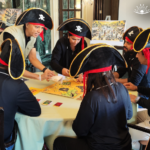
SimuRise helps companies develop ownership, accountability, and self-leadership through Experiential Learning, Business Simulations, and Leadership Journeys.
Ownership cannot be built solely through lectures; it must be experienced. Individuals must find out what happens if they delay making decisions, work alone, wait on others for instructions, don’t request assistance with tasks, or focus only on their individual task rather than the team task, etc.
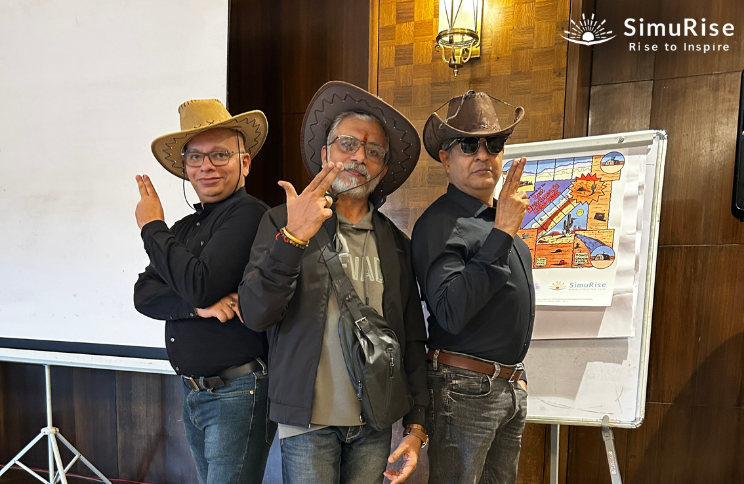
SimuRise uses simulations such as The Quest for King Solomon’s Mines, The Search for the Lost Dutchman’s Gold Mine, FreshBiz, Diamonds of Amazonia, and Square Wheels to Round Wheels to allow individuals to experience the authentic behaviors of true leaders in a safe environment.
Ownership affects our results.
- The cost of waiting is apparent.
- The value of asking for help begins there.
- Collaboration leads to better results; we perform better when we help one another.
- They will begin to consider how their thinking can affect their ability to achieve results at work.
- Awareness is created during the simulation. Insight is gained through the debrief. The application is established through the action plan.
This will result in changing Ownership from a word leaders use during reviews to a behavior that team members perform continuously.
Key Takeaways
- Teams do not take ownership simply because leaders demand it.
- Low ownership often results from unclear expectations, weak decision rights, fear of mistakes, poor meetings, overwhelm, and leadership habits that foster dependency.
- Ownership grows when people have clarity, trust, purpose, decision space, psychological safety, and capability.
- Leaders must delegate outcomes, not just tasks.
- Psychological safety and accountability must work together.
- Experiential learning helps teams practice ownership in realistic situations and reflect on the behaviors that support or block success.
Conclusion
If your team is not taking ownership, the answer is not always to push harder, chase more, or control more.
The better question is: have we created the conditions where ownership can grow?
People take ownership when they understand the big picture, know what success looks like, have the authority to decide, feel safe to make mistakes, and believe their contribution matters.
Leaders play a critical role in creating these conditions.
When they step back with clarity, delegate real outcomes, build trust, and develop people’s capability, teams begin to shift from dependency to ownership.
Because ownership is not a personality trait.
It is a leadership culture.
To build ownership and accountability in your teams through experiential learning and business simulations, reach out to marketing@simurise.com or connect with Annie at +91 9082381193.