Introduction
Sales promised a delivery date, but operations were not informed early enough. Finance approved a budget without knowing the latest project changes. HR planned a people initiative without enough business input. Customer service received complaints about something they had no context for. Everyone was working hard, but nobody was fully aligned.
This is how interdepartmental communication problems show up in organizations. They rarely begin as big conflicts. They usually begin with small gaps: one missed update, one unclear handover, one assumption, one delayed escalation, or one meeting where everyone heard the update but nobody confirmed ownership.
Over time, these small gaps become expensive. Teams duplicate work. Projects slow down. Customer commitments are missed. Departments start blaming each other. Leaders spend more time resolving friction than moving the business forward.
The real problem is not always that people do not know how to communicate. In many organizations, poor communication between departments is a symptom of deeper issues: unclear ownership, siloed goals, low trust, competing priorities, weak collaboration, and a lack of shared business context.
When information does not flow clearly, teams may work harder, but the organization moves more slowly.
Quick Answer: What Are Interdepartmental Communication Problems?
Interdepartmental communication problems happen when information does not flow clearly between teams, departments, or business units. These problems often lead to delays, duplicated effort, missed deadlines, poor handovers, customer frustration, low trust, and internal friction.
The root cause is usually not communication alone. It often includes unclear ownership, siloed goals, weak collaboration, delayed escalation, low trust, and lack of shared priorities. Organizations can improve interdepartmental communication by creating shared goals, clarifying roles, building cross-functional trust, improving meeting discipline, making dependencies visible, and using experiential learning or business simulations to help teams experience the cost of poor communication.
What Are Interdepartmental Communication Problems?
Interdepartmental communication problems occur when departments fail to share the right information with the right people at the right time. The issue may seem simple on the surface, but it can affect the entire workflow.
For example, sales may not update delivery teams about a client commitment. Operations may not inform customer-facing teams about delays. Finance may not communicate budget constraints clearly. Product teams may not involve support teams before launch. HR may design a program without enough input from business leaders. Regional teams may solve similar problems separately without sharing learnings.
These situations create confusion because every department sees only a part of the picture. Each team may believe it is doing its job well, but the overall customer or business outcome suffers.
Good interdepartmental communication is not just about sending messages. It is about creating clarity, alignment, timely information flow, shared ownership, and trust between teams.
Why Poor Communication Between Departments Happens
Poor communication between departments is rarely caused by one person or one bad meeting. It usually develops from patterns in how teams work, prioritize, and measure success.
Here are the most common reasons.
1. Departments Work Toward Different Goals
When departments are measured only on their own targets, communication becomes selective. Teams focus on what helps their function succeed, even if another department needs information earlier.
For example, sales may focus on closing deals, operations on capacity, finance on cost, and customer service on issue resolution. All of these goals matter, but without a shared business outcome, departments begin to optimize locally.
This creates friction because each team is working hard, but not always together.
2. Teams Operate in Silos
Departmental silos appear when teams protect their own information, resources, processes, and priorities. Over time, people start thinking in terms of “my department” instead of “our organization.”
Silos reduce trust and slow communication. People may avoid involving other teams because they expect delay, resistance, or blame. Instead of sharing early, they wait until the issue becomes unavoidable.
The result is late communication and weak collaboration.
3. Roles and Ownership Are Unclear
Many communication gaps arise because people are unclear about who owns what. They may not know who should inform whom, when escalation is required, or who must make the final decision.
This leads to assumptions such as “I thought they knew,” “I assumed someone else informed them,” or “I did not know I was responsible for that update.”
When ownership is unclear, communication becomes inconsistent.
4. Information Is Shared Too Late
Late communication is one of the biggest causes of interdepartmental friction. Teams often share information only after a deadline is at risk, a customer has complained, or a problem has become urgent.
By then, the receiving department has very little time to respond. What could have been solved calmly becomes a crisis.
Early communication protects outcomes. Late communication creates pressure.
5. Meetings Replace Real Alignment
Many organizations have enough meetings, but not enough alignment. People attend reviews, share updates, and discuss issues, but decisions, dependencies, risks, owners, and next steps remain unclear.
A meeting is not useful only because people were present. It is useful when it creates clarity.
If meetings do not end with clear decisions, responsibilities, timelines, and communication requirements, they only create the illusion of alignment.
6. Low Trust Between Departments
When trust is low, departments assume negative intent. One team may believe another team is delaying deliberately. Another may feel unsupported. A third may feel blamed for problems it did not create.
Low trust changes the way people communicate. They share less, document defensively, escalate politically, and avoid open conversations.
Communication improves when teams believe other departments are trying to solve the same business problem rather than protect themselves.
7. Leaders Reward Functional Performance More Than Shared Outcomes
If leaders reward only functional success, departments will naturally protect their own goals. This can create internal competition even when the organization needs collaboration.
A team may hit its own target while creating problems for another department. From a functional view, this may look like success. From an enterprise view, it creates waste.
Organizations must reward collaboration, resource sharing, and shared outcomes if they want departments to communicate better.
8. There Is No Shared Business Context
Departments often interpret priorities differently because they do not understand each other’s pressures. Sales may not understand operational constraints. Operations may not understand customer urgency. Finance may not understand delivery realities. HR may not understand business timelines.
When teams do not understand the larger context, communication becomes transactional. They exchange updates, but they do not truly understand the impact of their actions on others.
Shared context creates better decisions and stronger collaboration.
The 5 Interdepartmental Communication Traps
Interdepartmental communication problems often follow predictable patterns. These traps are useful for leaders, HR teams, and L&D professionals because they help diagnose what is really happening.
1. The Assumption Trap
This happens when people assume others already know what they know. A team may assume that another department has received the update, understood the change, or recognized the urgency.
Assumptions create invisible gaps. Nobody realizes there is a problem until the work reaches a handover, a deadline, a customer interaction, or a review meeting.
Strong teams do not depend on assumptions. They confirm clarity.
2. The Late Escalation Trap
This happens when teams communicate only after the issue has become serious. People may avoid early escalation because they do not want to create panic, look incapable, or involve too many people.
But late escalation reduces options. By the time others are informed, there may be little time to solve the problem well.
A healthy organization encourages early risk-sharing.
3. The Meeting Trap
This happens when leaders believe communication has occurred simply because a meeting took place. But many meetings are only update-sharing sessions. They do not create decisions, ownership, or alignment.
A meeting without clear next steps is not alignment. It is an activity.
The better question is not, “Did we discuss it?” The better question is, “Who owns what after this discussion?”
4. The Functional Protection Trap
This happens when departments protect their own goals, timelines, resources, or reputation. Teams may withhold information, avoid difficult conversations, or defend their positions rather than address the larger problem.
Functional protection may help a department look good temporarily, but it weakens organizational performance.
Strong leaders shift the conversation from “my function” to “our outcome.”
5. The Blame Transfer Trap
When communication breaks down, teams often focus on who caused the issue. Sales blames operations. Operations blames sales. Finance blames business teams. Business teams blame HR or technology.
Blame may create temporary relief, but it does not solve the system problem.
A better question is: “What broke in the communication flow, and how do we prevent it next time?”
Poor Communication vs Strong Cross-Functional Communication
| Poor Interdepartmental Communication | Strong Cross-Functional Communication |
| Information is shared late | Information is shared early |
| Teams work in silos | Teams work toward shared outcomes |
| Departments blame each other | Departments solve problems together |
| Meetings create updates only | Meetings create clarity and decisions |
| Ownership is unclear | Roles and next steps are clear |
| Teams protect resources | Teams share resources when needed |
| Problems are escalated late | Risks are raised early |
| Customer impact is fragmented | Customer experience is owned collectively |
| Effort is duplicated | Knowledge and learnings are shared |
| Leaders optimize for function | Leaders think enterprise-wide |
This shift is not only about communication style. It is about building a better way of working across the organization.
The Business Cost of Interdepartmental Communication Problems
The cost of poor communication between departments is rarely visible in one meeting. It shows up later as rework, delays, customer frustration, missed opportunities, and teams blaming each other for problems that could have been prevented.
Here are the biggest business costs.
1. Delayed Decisions
When information does not move clearly between departments, decisions slow down. Leaders wait for updates. Teams wait for approvals. Projects wait for clarity. Customer issues wait for internal alignment.
Decision delays are often not caused by a lack of intelligence. They are caused by a lack of timely information.
2. Duplicated Effort
Departments may unknowingly solve the same problem separately. One team creates a report another team already has. One region builds a process another region already tested. One function repeats work because information was not shared.
Duplicated effort wastes time, energy, and resources.
3. Rework and Quality Issues
Poor communication leads to wrong assumptions. Teams may complete work based on outdated information, unclear requirements, or incomplete context.
Then the work comes back for correction.
Rework creates frustration because people feel they worked hard, but the effort did not create the right outcome.
4. Missed Deadlines
Deadlines are often missed not because teams are lazy, but because dependencies are discovered too late. One department cannot complete its work because another department failed to provide a required input on time.
When dependencies are not visible, timelines become unrealistic.
5. Customer Dissatisfaction
Customers do not care which department failed to communicate. They only experience delay, confusion, or broken promises.
If internal teams are not aligned, the customer receives fragmented service. This affects trust, loyalty, and business reputation.
6. Low Trust and Internal Friction
Communication gaps create stories. People start assuming that other departments are careless, slow, difficult, or uncooperative.
Over time, these stories damage relationships.
Low trust then creates more communication problems, and the cycle continues.
7. Weak Strategy Execution
Strategy depends on departments working together. If business units, functions, and teams do not communicate clearly, strategy remains fragmented.
Leaders may agree on the direction, but execution breaks down in handovers, dependencies, priorities, and ownership gaps.
This is why interdepartmental communication is not a soft issue. It is a strategy execution issue.
Is This a Communication Problem or a Collaboration Problem?
Many organizations try to solve poor communication by conducting communication skills training. That may help, but it may not solve the real issue.
If departments are not communicating, the problem may not be only language, email clarity, or meeting etiquette. It may be a collaboration and alignment problem.
Communication improves when teams have shared goals, visible dependencies, clear ownership, trust, and a reason to work together.
If departments are rewarded separately, they will communicate separately. If teams do not trust each other, they will not share early. If ownership is unclear, messages will fall through gaps. If leaders do not model enterprise thinking, departments will protect their own function.
This is why leaders must look beyond communication channels and ask deeper questions:
- Do teams have shared outcomes?
- Do departments understand each other’s pressures?
- Are dependencies visible?
- Is ownership clear?
- Are risks raised early?
- Is collaboration rewarded?
- Are leaders solving problems together or defending functions?
When communication is treated as a collaborative behavior, the solution becomes stronger.
How Leaders Can Improve Communication Between Departments
Improving interdepartmental communication requires systems, behaviors, and leadership discipline. It cannot depend only on people “being better communicators.”
Here are practical actions leaders can take.
1. Create Shared Goals
Departments communicate better when they are working toward a common outcome. Leaders should define what success means for the organization, not only for each function.
For example, instead of measuring only sales conversion, delivery efficiency, or cost control in isolation, leaders can align teams around customer experience, speed, quality, and business value.
Shared goals reduce functional protection.
2. Clarify Ownership and Decision Rights
Teams should know who owns what, who needs to be informed, who must be consulted, and who makes the final decision.
This can be done through simple role clarity conversations, RACI mapping, project charters, escalation rules, and decision-rights discussions.
Clear ownership reduces confusion.
3. Make Dependencies Visible
Cross-functional projects should begin with dependency mapping.
Ask:
- Which teams are involved?
- What inputs are required?
- Who depends on whom?
- What information must be shared?
- What can delay execution?
- What risks should be raised early?
Visible dependencies prevent late surprises.
4. Build Early Warning Systems
Teams should be encouraged to raise risks early. A risk raised early is easier to solve than a crisis raised late.
Leaders can create early warning systems through weekly risk reviews, project dashboards, escalation channels, and open check-ins.
The message should be clear: “Raise it early. We can solve it together.”
5. Improve Meeting Discipline
Every cross-functional meeting should create clarity.
Before ending a meeting, confirm:
- What decision was made?
- Who owns the next step?
- What is the deadline?
- Who else must be informed?
- What dependency has changed?
- What risk needs attention?
Meetings should not only exchange updates. They should move work forward.
6. Build Trust Between Departments
Trust improves when departments understand each other’s realities. Leaders can create opportunities for teams to share challenges, constraints, priorities, and expectations.
This can happen through cross-functional workshops, facilitated conversations, joint problem-solving sessions, and experiential learning interventions.
Trust grows when teams stop seeing each other as obstacles and start seeing each other as partners.
7. Reward Collaboration, Not Only Functional Success
Organizations should recognize people who support other departments, share resources, flag risks early, solve cross-functional problems, and act in service of the broader business outcome.
If only individual or departmental success is rewarded, communication will remain limited.
What gets rewarded gets repeated.
8. Conduct Reflection and Debrief Sessions
After major projects, teams should review the quality of communication and collaboration.
Ask:
- What communication worked well?
- Where did the information flow break down?
- Which dependency was missed?
- Where did we assume instead of confirm?
- What should we do differently next time?
Reflection helps teams improve the system rather than just blame individuals.
Why Communication Training Alone May Not Be Enough
Communication training can teach important skills such as active listening, email clarity, meeting etiquette, presentation skills, giving and receiving feedback, and conflict conversations.
But interdepartmental communication problems often require more than communication techniques.
Teams need to experience how poor communication affects outcomes.
They need to see what happens when information is held back, when resources are not shared, when departments compete, when escalation is delayed, and when teams focus only on their own success.
This is where experiential learning and business simulations become powerful.
A workshop can explain communication.
A simulation can reveal communication behavior.
How Experiential Learning Improves Interdepartmental Communication
Experiential learning helps teams experience communication and collaboration challenges in a safe but realistic environment.
In a business simulation or experiential learning workshop, participants may need to make decisions, manage resources, share information, ask for help, collaborate with other teams, and work toward a shared goal.
During the experience, real behaviors appear.
Some teams share information early. Some hold it back. Some ask for help. Some struggle alone. Some collaborate. Some compete. Some focus on their own score. Some think about the larger outcome.
Then the debrief creates insight.
Participants often realize:
- “This is exactly what happens at work.”
- “We assume others know.”
- “We wait too long to communicate.”
- “We protect our own resources.”
- “We do not ask for help early enough.”
- “We focus on our department instead of the organization.”
This is why collaborative business simulations are valuable. They help teams see the cost of poor communication and the value of cross-functional collaboration.
The learning becomes practical because participants are not only told what to do. They experience what must change.
How SimuRise Helps Teams Improve Communication Between Departments
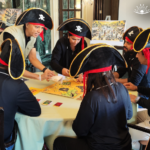
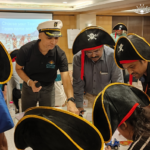
At SimuRise, we help organizations improve cross-functional collaboration, interdepartmental communication, ownership, trust, and team alignment through experiential learning and business simulations.
Our corporate training programs are designed to help leaders, managers, and teams experience real workplace behaviors in safe but challenging environments.
Through simulations such as The Quest for King Solomon’s Mines, The Search for The Lost Dutchman’s Gold Mine, FreshBiz, Diamonds of Amazonia, and interventions such as Square Wheels to Round Wheels, participants experience the impact of communication gaps, silo thinking, poor resource sharing, delayed asking for help, unclear ownership, and lack of shared goals.
The experience is followed by facilitated reflection.
This is where participants connect the simulation to workplace situations and identify what must change in the way departments communicate and collaborate.
SimuRise’s Play–Learn–Apply approach helps teams move from activity to insight and from insight to workplace action.
Play
Participants engage in a business simulation or experiential challenge.
Learn
They reflect on communication, collaboration, decisions, resource use, and team behavior.
Apply
They connect insights to real workplace challenges and commit to better ways of working across departments.
This makes SimuRise a strong partner for organizations seeking corporate training solutions that go beyond awareness and drive behavior change.
SimuRise Simulations That Support Cross-Functional Communication
The Quest for King Solomon’s Mines
Useful for teams that need to build collaboration, strategic thinking, help-seeking, resource maximization, a growth mindset, ownership, and enterprise thinking.
The Search for The Lost Dutchman’s Gold Mine
Useful for teams that need to experience collaboration over competition, trust, planning, communication, resource management, and shared success.
FreshBiz
Useful for teams that need to build entrepreneurial thinking, opportunity spotting, resourcefulness, innovation, and collaboration.
Diamonds of Amazonia
Useful for remote and hybrid teams that need to practice decision-making, collaboration, productivity, resource management, and agility.
Square Wheels to Round Wheels
Useful for identifying bottlenecks, communication gaps, silos, inefficiencies, and obstacles that slow execution. It helps teams convert problems into practical improvement actions.
Is Your Organization Facing Interdepartmental Communication Problems?
Use these questions as a quick diagnostic.
- Do departments blame each other when things go wrong?
- Are teams duplicating work because information is not shared?
- Do projects get delayed because updates come too late?
- Do leaders assume alignment because meetings happened?
- Are handovers unclear between departments?
- Do teams protect information, resources, or priorities?
- Are customers affected by internal communication gaps?
- Are roles and ownership unclear?
- Do people often say, “I was not informed”?
- Are dependencies identified too late?
- Do departments have conflicting priorities?
- Are problems escalated only when urgent?
- Do teams avoid asking each other for help?
- Are cross-functional meetings mostly updates, not decisions?
- Do teams work hard but still miss shared outcomes?
If many of these are true, your organization may not have only a communication problem.
It may have a problem with collaboration, trust, ownership, and alignment.
Interdepartmental Communication Diagnostic Checklist for HR and L&D Leaders
This checklist can help HR and L&D leaders assess whether communication gaps are affecting business outcomes.
Communication Flow
- Information is shared with the right people at the right time.
- Departments communicate changes before they become urgent.
- Teams know which updates must be shared cross-functionally.
- There is clarity on who needs to be informed, consulted, and involved.
Ownership and Accountability
- Roles and responsibilities are clear.
- Decision owners are identified.
- Handovers include next steps and deadlines.
- Action items are reviewed after meetings.
Collaboration and Trust
- Departments solve problems together.
- Teams share resources and information.
- People ask for help across functions.
- Leaders reward collaboration and shared outcomes.
Meeting Effectiveness
- Meetings end with decisions and owners.
- Dependencies are discussed openly.
- Risks are raised early.
- Follow-up actions are tracked.
Business Impact
- Projects move faster because information flows clearly.
- Rework is reduced.
- Customer experience is not affected by internal gaps.
- Teams understand the larger business outcome.
Key Takeaways
Interdepartmental communication problems are not only communication issues. They often reflect deeper problems in collaboration, trust, ownership, and alignment.
Poor communication between departments creates delays, duplicated effort, rework, missed deadlines, customer frustration, internal friction, and weak strategy execution.
Strong cross-functional communication requires shared goals, clear ownership, visible dependencies, early escalation, meeting discipline, and trust.
Communication training alone may not be enough when the real issue is silo behavior and lack of collaboration.
Experiential learning and business simulations help teams experience the cost of poor communication and reflect on what needs to change at work.
SimuRise helps organizations build cross-functional communication, collaboration, ownership, and team alignment through business simulations and experiential learning interventions.
Conclusion: Better Communication Builds Faster Execution
Poor communication between departments does not always seem like a major problem at first.
It may begin as a missed update, a late handover, an unclear meeting, or a small assumption. But over time, these gaps create rework, delays, frustration, and weaker business outcomes.
The solution is not just better emails or more meetings.
The real solution is better alignment.
Departments need shared goals. Teams need clear ownership. Leaders need to make dependencies visible. People need to raise risks early. Functions need to trust each other. Meetings need to create decisions. And organizations need to reward collaboration, not only functional success.
When departments communicate clearly, work moves faster. Decisions improve. Customers receive better service. Teams trust each other more. Leaders spend less time resolving friction and more time driving outcomes.
If your organization is facing interdepartmental communication problems and wants to build stronger collaboration, trust, ownership, and team alignment through experiential learning and business simulations, SimuRise can help.
To explore business simulations, experiential learning workshops, team alignment interventions, and corporate training programs for your teams, reach out to marketing@simurise.com or connect with Annie at +91 9082381193.