Introduction
Modern multinational corporations (MNCs) do business in environments with complexity created by multiple countries, varied cultures, teams of people from different specialties, and rapidly changing markets. Within such an environment, leadership is no longer about authority or individual excellence. It entails alignment, adaptability, and execution collectively.
Even though there are skilled, experienced leaders within these organizations, MNCs face obstacles to efficient decision-making caused by disparate decisions being made (i.e., fragmented) throughout the organization, competition between internal departments (i.e., internal competition), and the absence of organizational cohesion (i.e., lack of cohesion). Teams work hard, but often do not work in concert.
Consequently, collaborative leadership is imperative for MNCs.
Collaborative leadership is not a “soft skill.” It is a strategic asset enabling organizations to evaluate and implement strategies at an accelerated pace, create innovative products or services effectively, and achieve consistent quality in how they fulfill their promises within and outside of the organization.
What is Collaborative Leadership in MNCs?
Collaboration in leadership is the capacity of leaders to cooperate with others from various levels, departments, and locations in order to meet common goals as an organization.
Rather than having a leader who maintains authority and directs from above, a collaborative leader has shared responsibility for results, openly communicates with people in the company, collaborates with teams from more than one area, and solves problems collaboratively.
The complexity of collaboration increases significantly when there are multinational corporations involved because leaders manage the following types of cooperative issues beyond team dynamics:
- Cultural Differences
- Time Zones
- Matrix Reporting Structures
- Competing Regional Objectives
- Collaboration is essential to both the growth and survival of businesses in the future.
Collaborative leadership refers to the ability of leaders to work across functions, geographies, and hierarchies to achieve shared organizational goals.
Why MNCs Struggle with Collaboration at Leadership Levels
Collaboration is an essential aspect of leadership. It frequently fails because of a lack of intent and due to systemic barriers faced by leaders. In many organizations, leaders’ success is tied to achieving results within their departments rather than on achieving success for the company as a whole. This phenomenon creates silos between departments and prevents leaders from collaborating across departments.
Leaders based in various geographic regions operate in very different contexts than those operating in other regions, making it difficult for leaders across regions to align. Therefore, a particular method of doing things may work in one region but not work in another; therefore, there may not be a cohesive strategy when considering a global-level strategy.
In addition, the competing priorities placed upon leaders present obstacles to collaboration. Growth targets, cost reduction, innovation, and operational efficiency can compete with one another and prevent alignment. When teams of leaders do not clearly align their priorities and their goals, collaboration becomes difficult because leaders are forced to make tough trade-offs about what to prioritize and, therefore, do not serve the organization as a whole.
Communication is also a barrier to collaboration, as information can take a long time to reach its destination or can become distorted as it is transferred through various levels of an organization.
Lastly, there is the challenge of ego and identity. Leaders can be resistant to value-based collaboration when they feel their authority or perspective is being challenged.
The Business Impact of Poor Collaboration in MNCs
The effects of a breakdown in collaboration in an organization are not limited to internal conflicts, but also negatively influence the effectiveness of an organization as a whole.
When decisions require multiple approvals or alignment discussions among different teams, this process creates slower execution than needed. In addition, there will be missed opportunities for the organization because teams are not acting in a coordinated manner to pursue them.
Innovation is hampered when ideas are contained within one function and not shared across an organization.
Duplication of efforts creates inefficiencies and wastes resources. Without coordinating with each other, teams may be working on duplicate initiatives, leading to increased costs with no added benefits.
Finally, trust will erode. When leaders operate in silos, teams will start to question the intentions of leaders, and communications will become unnecessarily cautious, further harming the ability of teams to work together toward common goals.
Over time, organizations that have lost the collaborative team environment will reactively address challenges and will not proactively prepare for the future.
Why Traditional Leadership Development Falls Short
Leadership development initiatives are often used by organizations to address collaboration issues, but conventional approaches don’t often result in effective change.
Most leadership development programs alone focus on theory-based frameworks of how to communicate, lead, and collaborate instead of actually changing behaviors through learning.
An example would be that just because a leader understands how to collaborate at work, it doesn’t guarantee they will act that way when faced with real-life pressures.
Another reason that conventional education hasn’t improved collaboration is that it fails to incorporate context. The classroom and/or online formats being used for many of these programs do not simulate the true organizational complexities.
The opportunities for immediate feedback and making real-time decisions, both of which can help develop collaborative capabilities, are also often missing from these types of learning experiences.
As a result, leaders learn the theory behind collaboration but do not change their actual behaviors.
The Role of Experiential Learning in Building Collaborative Leaders
Experiential learning can be a solution to both aspects of this “doing” vs. “knowing” gap for leaders. Rather than simply telling leaders how to collaborate, experiential learning puts leaders into real-life, high-pressure situations where collaboration is essential for success.
In high-pressure environments:
1. There are consequences to our decisions immediately.
2. Trade-offs are not optional.
3. Communication issues are obvious.
4. The way leaders behave is tested in real-time.
Creating a true learning cycle for leaders:
1. Take Action
2. Receive Feedback
3. Reflect
4. Make Adjustments
Leaders can see for themselves what works, what does not work, and why.
As importantly, experiential learning creates an environment in which it is “safe to fail.” Leaders can try new ideas, make mistakes, learn from those mistakes, and attempt new things without consequences like those found in traditional business settings.
By creating this environment, experiential learning can make the process of learning very engaging and, at the same time, truly transformational.
What Effective Collaborative Leadership Training Looks Like
For collaborative leadership training to be effective in MNCs, it must go beyond content delivery and focus on behavioral transformation.
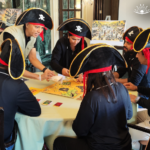
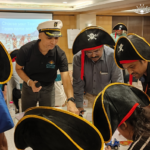
At its core, effective training incorporates immersive, simulation-based experiences where leaders must navigate complex challenges together. These simulations mirror real business scenarios, resource constraints, competing priorities, and time pressure, forcing leaders to collaborate in meaningful ways.
Cross-functional problem-solving is a critical component. Leaders from different departments work together, gaining visibility into each other’s challenges and perspectives. This breaks down silos and builds mutual understanding.
Decision-making under pressure is another key element. Leaders must make choices with incomplete information, balancing short-term needs with long-term goals.
Equally important is shared accountability. Success is not defined by individual performance but by collective outcomes. This reinforces the idea that leadership is a team sport.
Finally, structured debriefing ensures that experiences translate into insights. Facilitators guide participants to reflect on their actions, identify patterns, and connect learnings to real workplace behavior.
Key Capabilities Built Through Collaborative Leadership Training
Collaborative leadership training, when performed properly, allows leaders to develop many types of important skills and capabilities.
Through this training, leaders begin to have a broader view of their roles within the organization and start thinking with the organization in mind as they make decisions that affect it.
By balancing conflicting priorities and making decisions that will accomplish long-term objectives, the leaders become better aligned strategically.
Trust and psychological safety are enhanced. As a result of each leader working together under difficult circumstances, they gain confidence in the abilities of each other and their good intentions.
Effective communication is also enhanced. Each leader learns how to effectively share information, actively listen to others, and become aligned more quickly.
The most important result of all of the above is that each leader develops an ownership mentality that extends outside of just their area of responsibility. They begin to ask themselves, “How does this impact my team?” vs. “How does this benefit the entire organization?”.
How MNCs Can Implement Collaborative Leadership Training at Scale
The difficulty for multinational corporations (MNCs) is not only to develop capability, but also to achieve scale in their capability development.
The initial step in developing collaborative leadership skills in MNCs is to align the training delivered to employees with the company’s desired business results. Collaboration must be established as a driver of strategic organizational outcomes (e.g., enabling organizations to execute more quickly, innovate new products/services, or penetrate new markets), rather than as a generic competency.
In addition, all levels of leadership must receive training in collaboration. Collaboration cannot be established in a vacuum; it needs to be aligned among all hierarchically-based levels of managers, from those in the middle of the organization to those at the top.
A blended approach to training, including a mix of in-person simulations, virtual learning (via online courses), and ongoing reinforcement of prior training, is the preferred choice for organizations trying to form collaborative leadership skills. This will help create a consistent method of developing collaborative leadership across geographically dispersed teams.
Ongoing feedback about training is critical. Organizations should not only track attendance, but also behavioural changes in individuals and the impact of change on the organization’s business results.
Finally, collaborative leadership characteristics and behaviours should become part of the organization’s culture through performance management, managerial direction, and day-to-day behaviours.
Conclusion: Collaboration is No Longer Optional
In today’s interconnected and fast-moving business environment, collaborative leadership is not a “nice-to-have”; it is a competitive advantage.
MNCs that succeed are those where leaders:
- Align quickly
- Communicate openly
- Make decisions collectively
- Execute as one unified system
Building this capability requires more than intent. It requires intentional, experiential learning that transforms how leaders think and behave.
Because in the end, leadership is no longer about individual excellence.
It is about collective performance.
Ready to Build Collaborative Leaders Across Your Organization?
If your teams are struggling with silos, misalignment, or slow decision-making, it’s time to rethink how leadership is developed. Reach out to us at marketing@simurise.com or contact Annie at +91 9082381193 to explore how experiential learning can help your leaders collaborate, align, and perform at their highest potential.