Introduction
Corporate training is entering a major shift.
For years, many organizations measured training by the number of programs conducted, attendance completed, feedback scores received, and calendars executed. But in 2026, that approach is no longer enough.
Business leaders want to know whether learning is helping people perform better. HR and L&D leaders want to know whether training is building the right capabilities. Managers want learning that helps teams solve real problems. Employees want development that helps them stay relevant, advance their careers, and succeed in a workplace shaped by AI, automation, hybrid work, and evolving business expectations.
This is why corporate training in 2026 will not be only about learning delivery.
It will be about capability building.
Organizations will need to move from training as an event to learning as a business system. They will need to build skills faster, personalize learning better, create more practice-based development, measure impact more clearly, and prepare leaders and teams for disruption.
Three themes will define corporate training trends in 2026:
AI-powered learning, experiential learning, and skills-based development.
AI will change how learning is personalized, created, recommended, measured, and scaled. Experiential learning will become more important because organizations need behavior change, not only content consumption. Skills-based development will help companies move away from role-based assumptions and build capabilities that match future business needs.
For HR Heads, L&D Leaders, CHROs, Business Heads, and Talent Development teams, 2026 is a critical year.
The question is no longer:
How many people did we train?
The better question is:
What capability did we build, and how did it improve business performance?
Quick Answer: What Are the Top Corporate Training Trends for 2026?
The top corporate training trends for 2026 include AI-powered personalized learning, skills-based development, experiential learning, business simulations, leadership development for future-ready skills, learning in the flow of work, data-driven learning measurement, human-centered leadership, manager capability building, internal mobility, and a stronger focus on business impact.
Organizations will move beyond generic training programs and focus on building practical capabilities such as adaptability, strategic thinking, decision-making, collaboration, ownership, AI readiness, resilience, and learning agility.
What Is Changing in Corporate Training in 2026?
Corporate training is changing because work itself is changing.
AI is influencing how people work, learn, communicate, analyze information, and make decisions. Job roles are becoming more fluid. Skills are changing faster. Teams are more distributed. Business priorities are shifting quickly. Leadership expectations are rising. Employees are asking for more meaningful growth opportunities.
As a result, corporate training can no longer remain a support function that only responds to training requests.
It must become a strategic function that helps the organization build the capabilities required for business growth, transformation, and future readiness.
This means L&D teams will need to focus on:
- What skills are becoming critical?
- Which roles are being disrupted?
- What capabilities do managers need?
- How can learning support AI adoption?
- How do we build adaptability and resilience?
- How do we reduce skill gaps?
- How do we connect learning to business outcomes?
- How do we create behavior change?
- How do we measure impact beyond participation?
Corporate training in 2026 will be less about delivering content and more about designing learning ecosystems.
Why Corporate Training Trends Matter for HR and L&D Leaders
Trends matter only when they help organizations make better decisions.
For HR and L&D leaders, understanding corporate training trends in 2026 is important because learning budgets, employee expectations, leadership capabilities, and business outcomes are increasingly interconnected.
Organizations cannot afford training programs that are engaging but disconnected from business needs. They need development interventions that help people perform in real conditions.
A strong training strategy in 2026 should help organizations:
- Build future-ready leadership capability
- Prepare employees for AI-enabled work
- Improve adaptability and change readiness
- Strengthen decision-making and problem-solving
- Improve collaboration across functions
- Build ownership and accountability
- Reduce skill gaps
- Support internal mobility
- Improve retention through career development
- Connect learning to measurable business outcomes
The most successful L&D teams will not be the ones that run the most programs.
They will be the ones that build the most relevant capabilities.
Top Corporate Training Trends 2026
Here are the most important corporate training trends HR and L&D leaders should prepare for.
1. AI-Powered Learning Will Move From Experimentation to Everyday Use
AI will be one of the biggest trends in corporate training in 2026.
Many L&D teams have already started experimenting with AI for content creation, learning recommendations, assessments, coaching prompts, skill mapping, and learner support. In 2026, this experimentation will become more structured.
AI will help L&D teams:
- Personalize learning paths
- Recommend content based on skill gaps
- Create faster learning resources
- Support role-based learning
- Analyze learner data
- Provide learning nudges
- Build simulations and scenarios
- Support coaching conversations
- Help employees learn in the flow of work
But AI will not replace the need for human learning design.
AI can create content faster, but it cannot fully replace context, facilitation, reflection, emotional intelligence, ethical judgment, and behavioral learning.
The future of corporate training is not AI instead of humans.
It is AI that supports humans in learning faster, practicing better, and applying learning more effectively.
What HR and L&D Leaders Should Do
- Build AI literacy across the organization
- Train employees to use AI responsibly
- Use AI to personalize learning journeys
- Combine AI learning with human facilitation
- Help managers understand how AI changes work
- Focus on human skills that AI cannot replace
- Create clear governance for AI-enabled learning
2. Skills-Based Development Will Replace Generic Training Calendars
Corporate training in 2026 will become more skills-based.
Instead of creating training calendars only around broad topics, organizations will increasingly ask:
What skills do we need for our business strategy?
This is a major shift.
A skills-based development approach helps organizations identify the capabilities required for current and future roles. It also helps HR and L&D teams create more targeted learning journeys.
For example, instead of running a generic “leadership workshop,” an organization may identify specific capability gaps such as:
- Decision-making under pressure
- Strategic thinking
- Change agility
- Stakeholder management
- Coaching conversations
- Business acumen
- Collaboration across functions
- AI readiness
- Ownership and accountability
Then the learning intervention can be designed around those capabilities.
Skills-based development also helps with:
- Internal mobility
- Succession planning
- High-potential development
- Reskilling and upskilling
- Career pathways
- Workforce planning
- Learning ROI
What HR and L&D Leaders Should Do
- Build a skills taxonomy for critical roles
- Identify skill gaps linked to business strategy
- Use assessments and manager feedback
- Create role-based and capability-based learning paths
- Connect skills to career mobility
- Track skill development over time
- Move from “training completed” to “capability improved”
3. Experiential Learning Will Become Essential for Behavior Change
One of the strongest corporate training trends in 2026 will be the rise of experiential learning.
Organizations are realizing that employees do not build leadership behaviors only by listening to concepts. They need to practice, reflect, and apply.
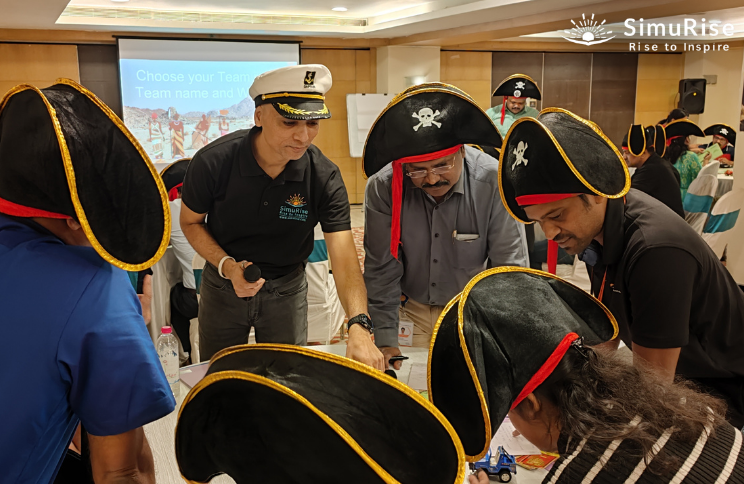
Experiential learning is powerful because it helps participants experience real workplace behaviors in a safe environment.
In an experiential learning program, participants may need to:
- Make decisions
- Collaborate with others
- Manage resources
- Solve problems
- Communicate under pressure
- Respond to uncertainty
- Ask for help
- Take ownership
- Reflect on their behavior
- Connect insights to work
This is very different from passive training.
In a classroom session, employees may gain an understanding of collaboration.
In an experiential simulation, they experience what happens when they do not collaborate.
That difference matters.
Behavior change requires awareness, emotion, practice, reflection, and commitment. Experiential learning brings these together.
What HR and L&D Leaders Should Do
- Add experiential learning to leadership programs
- Use business simulations for complex behaviors
- Include strong debriefs after activities
- Connect simulations to real workplace challenges
- Ask participants to create action plans
- Use experiential learning in offsites and strategy meets
- Measure behavioral commitments after programs
4. Business Simulations Will Gain More Importance in Leadership Development
Business simulations are becoming more relevant because leaders and managers need to practice real business behaviors.
A business simulation creates a realistic challenge in which participants must make decisions, manage limited resources, collaborate, take risks, and face consequences.
This makes simulations useful for developing:
- Strategic thinking
- Decision-making
- Collaboration
- Ownership
- Business acumen
- Resourcefulness
- Risk-taking
- Communication
- Asking for help
- Enterprise thinking
Business simulations are especially useful for leadership offsites, management development programs, high-potential journeys, team alignment interventions, and future-ready leadership development.
The power of a business simulation is not only in the activity.
The real value comes from the debrief.
A strong facilitator helps participants reflect on how they behaved, what decisions they made, where they collaborated, where they competed, where they delayed, and how these behaviors connect to the workplace.
What HR and L&D Leaders Should Do
- Use simulations for decision-making and collaboration
- Choose simulations based on business outcomes
- Avoid treating simulations as only fun activities
- Include reflection and action planning
- Use simulations for leadership offsites
- Map simulation outcomes to leadership competencies
- Reinforce learning after the program
5. Leadership Development Will Focus on Future-Ready Capabilities
Leadership development in 2026 will need to prepare leaders for complexity.
Organizations will need leaders who can guide teams through AI adoption, business disruption, changing employee expectations, and faster decision cycles.
The most important future-ready leadership capabilities will include:
- Adaptability
- Strategic thinking
- Decision-making under uncertainty
- Collaboration
- Ownership and accountability
- Human-centered leadership
- Business acumen
- Resilience
- Learning agility
- Innovation mindset
- Communication
- Enterprise thinking
This means leadership development cannot remain only about communication skills or basic people management.
Those are still important, but leaders also need to understand business context, technology shifts, cross-functional complexity, and human motivation.
What HR and L&D Leaders Should Do
- Define future-ready leadership behaviors
- Build leadership development around business priorities
- Focus strongly on middle managers
- Include simulations and real business scenarios
- Develop both human and business capabilities
- Add coaching and reflection
- Measure leadership behavior change
6. Manager Capability Building Will Become a Priority
Managers are under increasing pressure.
They must execute strategy, manage teams, adopt AI tools, build engagement, handle hybrid work, coach employees, support careers, and deliver performance.
But many managers are not receiving enough support.
This is why manager capability building will become one of the most important corporate training trends in 2026.
Managers need development in:
- Coaching
- Delegation
- Feedback
- Decision-making
- Conflict management
- Psychological safety
- Performance conversations
- Change communication
- Career conversations
- Team alignment
- Ownership and accountability
Managers are the link between strategy and execution. If they are not developed, even the best organizational strategy will slow down.
What HR and L&D Leaders Should Do
- Create structured manager development programs
- Support first-time managers early
- Build decision-making and ownership capability
- Train managers to coach, not only supervise
- Give managers tools for career conversations
- Reinforce learning through peer circles
- Use simulations to practice real management situations
7. Learning Will Become More Personalized and Role-Based
Generic learning paths will become less effective.
Not all employees need the same training. A first-time manager, sales leader, tech team lead, senior manager, and high-potential employee may need different capabilities.
AI, skills data, assessments, and learning platforms will make it easier to personalize learning based on roles, goals, performance needs, and career aspirations.
Personalization will show up in:
- Role-based learning paths
- Skill-gap-based recommendations
- Adaptive learning modules
- Personalized coaching prompts
- AI-driven content suggestions
- Learner dashboards
- Manager-based development plans
However, personalization should not become isolation.
Some skills still need shared experience, team learning, collaboration, and facilitated reflection.
The best approach will combine personalized digital learning with human-led experiential development.
What HR and L&D Leaders Should Do
- Use assessments to identify individual learning needs
- Create learning paths by role and skill level
- Use AI recommendations carefully
- Combine digital learning with group reflection
- Allow employees to choose relevant learning journeys
- Use managers to support development goals
8. Learning in the Flow of Work Will Become More Practical
Employees are busy. Managers are stretched. Talent teams are overloaded.
Long training programs may not always be possible for every need.
That is why learning in the flow of work will become stronger in 2026.
This means employees learn while working, through:
- Short learning nudges
- Manager coaching
- Reflection prompts
- Peer learning
- Job aids
- AI assistants
- Microlearning
- Project-based learning
- Stretch assignments
- Real-time feedback
- Action learning projects
This does not mean longer programs will disappear. Deep leadership development still needs time, reflection, and practice.
But many learning needs can be supported through smaller, more frequent learning moments.
What HR and L&D Leaders Should Do
- Embed learning into daily work
- Create manager-led learning moments
- Use short reflection questions after projects
- Provide quick tools and job aids
- Encourage peer learning
- Use AI for quick support
- Connect microlearning with larger capability goals
9. Learning ROI Will Move Beyond Feedback Scores
In 2026, organizations will ask harder questions about learning impact.
Feedback scores will still matter, but they will not be enough.
L&D teams will need to show how learning supports:
- Business performance
- Productivity
- Decision speed
- Leadership readiness
- Employee retention
- Internal mobility
- Collaboration
- Customer experience
- Strategy execution
- Behaviour change
- Skill growth
This means learning measurement must become more practical and business-linked.
Instead of only asking, “Did participants like the program?” L&D teams should ask:
- What did participants learn?
- What will they apply?
- What behavior changed?
- What business problem did the program support?
- What commitments were made?
- What progress happened after 30, 60, or 90 days?
- What did managers observe after the intervention?
What HR and L&D Leaders Should Do
- Define success before designing the program
- Link learning outcomes to business goals
- Capture behavioral commitments
- Use manager feedback
- Track skill improvement
- Review action plans
- Measure application, not only attendance
10. Human Skills Will Become More Valuable in the AI Era
As AI grows more capable, human skills become more important.
AI can support analysis, content creation, automation, and productivity. But organizations still need people who can build trust, make ethical decisions, communicate with empathy, lead change, collaborate across differences, and exercise judgment.
The most important human skills will include:
- Emotional intelligence
- Empathy
- Critical thinking
- Ethical judgment
- Communication
- Collaboration
- Creativity
- Relationship building
- Coaching
- Conflict resolution
- Sense-making
- Leadership presence
AI may increase speed, but human skills create trust.
A future-ready workforce needs both.
What HR and L&D Leaders Should Do
- Train employees on responsible AI use
- Build critical thinking for AI outputs
- Develop emotional intelligence and communication
- Build coaching capability in managers
- Strengthen psychological safety
- Use experiential learning for human skills
- Balance digital skills with leadership behaviors
11. Career Development and Internal Mobility Will Become Stronger L&D Priorities
Employees want growth.
If they do not see development opportunities inside the organization, they may look outside.
That is why career development and internal mobility will become major priorities for corporate training in 2026.
Learning will be closely connected to:
- Career paths
- Internal job opportunities
- Leadership pipelines
- Skill visibility
- Stretch assignments
- Talent marketplaces
- Mentorship
- Coaching
- High-potential development
This shift is important because organizations cannot always hire their way out of skill gaps. They need to build and move talent internally.
What HR and L&D Leaders Should Do
- Connect learning to career pathways
- Make skills visible
- Support internal mobility
- Develop managers as career coaches
- Create stretch assignments
- Build HiPo learning journeys
- Use learning to retain critical talent
12. Leadership Offsites Will Become More Outcome-Driven
Leadership offsites will remain important, but expectations will change.
Organizations will not want offsites that are only fun, social, or motivational. They will want offsites that create alignment, collaboration, reflection, and business action.
Leadership offsite activities will increasingly include:
- Business simulations
- Strategy alignment workshops
- Square Wheels to Round Wheels sessions
- Decision-making simulations
- Values and behavior alignment
- Leadership reflection circles
- Action planning conversations
- Cross-functional collaboration challenges
Offsites will become a platform for leadership interventions.
The goal will be to help leaders experience behaviors, reflect on what needs to change, and commit to actions that support business outcomes.
What HR and L&D Leaders Should Do
- Define the business outcome of the offsite
- Choose activities linked to leadership behaviors
- Use simulations for collaboration and decision-making
- Include facilitated debriefs
- Build action plans
- Review commitments after the offsite
Corporate Training Trends 2026: Comparison Table
| Trend | What It Means | What HR and L&D Should Do |
| AI-powered learning | AI supports personalization, content creation, recommendations, and analytics | Use AI for scale, but keep human facilitation for reflection and behavior change |
| Skills-based development | Learning is built around critical capabilities, not generic topics | Map skills to business strategy and build targeted learning paths |
| Experiential learning | Participants learn by doing, reflecting, and applying | Use simulations, activities, and debriefs for behavior change |
| Business simulations | Leaders practice decisions, collaboration, and strategy in safe environments | Use simulations for leadership development, offsites, and team alignment |
| Future-ready leadership | Leaders need adaptability, decision-making, collaboration, and human-centered leadership | Build leadership programs around future-ready capabilities |
| Manager capability building | Managers become key drivers of execution and employee growth | Develop managers through coaching, simulations, and peer learning |
| Personalized learning | Employees get learning based on role, skills, and goals | Combine AI-driven personalization with group learning |
| Learning in flow of work | Learning happens through daily work, nudges, coaching, and projects | Embed learning into work routines |
| Learning ROI | Impact is measured through application and business outcomes | Track behavior change, skill growth, and manager feedback |
| Human skills | AI increases the need for empathy, judgment, communication, and trust | Build human-centered leadership and critical thinking |
| Internal mobility | Learning supports career growth and talent movement | Connect development to career pathways |
| Outcome-driven offsites | Offsites become leadership interventions | Use experiential learning and action planning |
How to Build a Corporate Training Strategy for 2026
Understanding trends is useful. But the real value comes from applying them.
Here is a practical approach HR and L&D leaders can use.
Step 1: Start With Business Priorities
Do not begin with a training calendar.
Begin with business priorities.
Ask:
- What are the organization’s top goals for 2026?
- What capabilities are needed to achieve them?
- What skills are missing?
- Which leadership behaviors must change?
- Which teams need stronger collaboration?
- Where is execution slowing down?
- What skills are becoming more important because of AI?
This helps L&D become strategic.
Step 2: Identify Critical Skills and Behavior Gaps
Use multiple sources:
- Manager feedback
- Performance data
- Employee surveys
- Business reviews
- Leadership interviews
- Skill assessments
- Project retrospectives
- Customer feedback
- Internal mobility data
Look for both technical and behavioral gaps.
For example, AI readiness may require technical fluency, but it also requires judgment, curiosity, adaptability, and ethical thinking.
Step 3: Match the Learning Format to the Outcome
- Not every training format is suitable for every outcome.
- Use digital learning for awareness and scale.
- Use coaching for personal leadership development.
- Use workshops for structured learning and common language.
- Use business simulations for behavior practice.
- Use action learning projects for real business application.
- Use learning journeys for sustained capability building.
- The format should follow the outcome.
Step 4: Build Experiential Learning Into Key Programs
For important leadership and behavioural capabilities, add experiential learning.
This is especially useful for:
- Leadership development
- Manager capability building
- Collaboration
- Strategy execution
- Ownership and accountability
- Decision-making
- Business acumen
- Change agility
- Team alignment
- Leadership offsites
The experience should be followed by a strong debrief and workplace action planning.
Step 5: Use AI Carefully and Intentionally
AI can help L&D teams work faster and smarter, but it should be used with intention.
Use AI for:
- Content support
- Learning recommendations
- Skill mapping
- Coaching prompts
- Assessment insights
- Learner support
- Personalization
- Analytics
But do not use AI to replace human connection where facilitation, trust, reflection, and behaviour change are needed.
AI can support learning.
Human facilitation deepens it.
Step 6: Measure What Matters
Define success before the program begins.
- If the goal is collaboration, measure collaboration.
- If the goal is decision-making, measure decision speed and quality.
- If the goal is ownership, measure action follow-through.
- If the goal is leadership readiness, measure behaviour change and manager feedback.
Useful measurement methods include:
- Pre- and post-assessments
- Manager observations
- Participant reflections
- Behavioural commitments
- Action plan completion
- Business metrics
- Follow-up surveys
- Coaching conversations
- Team reviews
Learning impact should be visible after the program, not only during it.
Best Corporate Training Approach by Business Need
| Business Need | Best Training Approach |
| AI awareness | Digital learning, workshops, AI literacy sessions |
| AI adoption behavior | Practice labs, manager-led conversations, workflow experiments |
| Collaboration | Business simulations, team challenges, facilitated reflection |
| Leadership behavior change | Experiential learning, coaching, simulations, learning journeys |
| Decision-making | Business simulations, decision scenarios, review discussions |
| Business acumen | Business simulations, finance and strategy workshops |
| Manager development | Coaching practice, simulations, peer learning, action planning |
| Change agility | Change simulations, reflection, communication practice |
| Ownership and accountability | Experiential challenges, action plans, manager reinforcement |
| Internal mobility | Skills mapping, career pathways, learning journeys |
| Learning ROI | Business-linked metrics, behavioral tracking, manager feedback |
| Leadership offsites | Experiential learning interventions and business simulations |
This table helps HR and L&D leaders move from trend awareness to training decisions.
How SimuRise Helps Organizations Prepare for Corporate Training Trends 2026
At SimuRise, we help organizations build future-ready leaders, managers, and teams through experiential learning, business simulations, and game-based learning.
Our work aligns strongly with the major corporate training trends for 2026 because organizations are looking for training that is engaging, practical, behavior-focused, and connected to business outcomes.
SimuRise helps organizations address challenges such as:
- Leadership development
- Collaboration across teams
- Decision-making under pressure
- Ownership and accountability
- Business acumen
- Strategic thinking
- Asking for help
- Resourcefulness
- Growth mindset
- Team alignment
- Change agility
- Enterprise thinking
- Leadership offsite impact
Our Play–Learn–Apply approach helps participants first experience a challenge, then reflect on their behavior, and finally connect the learning to workplace action.
This is especially useful because many 2026 training priorities are not only knowledge-based. They are behavior-based.
Employees and leaders do not only need to know more.
They need to act differently.
SimuRise Programs and Business Simulations for 2026 Training Priorities
The Quest for King Solomon’s Mines
Best for collaboration, strategic thinking, growth mindset, asking for help, playing to win, resource maximization, ownership, and leadership offsites.
The Search for The Lost Dutchman’s Gold Mine
Best for collaboration over competition, trust, resource management, planning, leadership alignment, and shared success.
FreshBiz
Best for entrepreneurial thinking, opportunity spotting, innovation, proactivity, resourcefulness, and multidimensional thinking.
Diamonds of Amazonia
Best for virtual and hybrid teams that need to build decision-making, collaboration, productivity, agility, and resource management.
Square Wheels to Round Wheels
Best for identifying obstacles, bottlenecks, inefficiencies, silos, and improvement opportunities through reflective team conversations.
Accelium and Game-Based Problem-Solving
Best for problem-solving, analytical thinking, flexible thinking, decision-making, resilience, and cognitive skill development.
SimuRise can support leadership offsites, strategy meetings, management development programs, high-potential learning journeys, OD interventions, team alignment programs, and future-ready leadership development.
Corporate Training Trends 2026 Checklist for HR and L&D Leaders
Use this checklist to assess whether your training strategy is ready for 2026.
AI Readiness
- Are employees being trained to use AI responsibly?
- Are managers prepared to lead AI-enabled teams?
- Is AI being used to personalize learning?
- Are employees developing judgment and critical thinking for AI outputs?
Skills-Based Development
- Have we identified critical skills for 2026?
- Are learning paths aligned to business priorities?
- Are skills being assessed and tracked?
- Are career paths connected to skill development?
Experiential Learning
- Are participants practicing behaviors?
- Are business simulations used where behavior change is needed?
- Are debriefs built into learning design?
- Are insights converted into workplace action?
Leadership and Manager Development
- Are managers being developed as coaches?
- Are leaders practicing decision-making under uncertainty?
- Are middle managers being prepared for strategy execution?
- Are leaders building adaptability and enterprise thinking?
Business Impact
- Are learning outcomes linked to business goals?
- Are we measuring application after programs?
- Are managers involved in reinforcement?
- Are training programs improving performance, collaboration, or execution?
This checklist can also be used as a downloadable lead magnet:
Download: Corporate Training Trends 2026 Checklist for HR and L&D Leaders
Questions HR and L&D Leaders Should Ask Before Planning 2026 Training
Before finalizing the training calendar for 2026, ask:
- Which business goals will training support?
- What skills are becoming critical for our organization?
- Which roles are most affected by AI and automation?
- Are we building human skills along with digital skills?
- Are our programs creating behavior change or only awareness?
- Are managers equipped to support employee development?
- Are we using experiential learning where practice is needed?
- Are leadership offsites connected to business outcomes?
- How will we measure learning impact?
- Are employees able to see career growth through learning?
- Are we building internal capability or depending only on hiring?
- Are our learning programs personalized enough?
- Are we preparing leaders for uncertainty, change, and strategy execution?
These questions help L&D move from activity planning to capability planning.
Common Mistakes to Avoid in Corporate Training 2026
1. Treating AI as the Whole Strategy
AI is important, but it is not a training strategy on its own. Organizations still need leadership, communication, trust, ethics, judgment, and behavior change.
2. Running Generic Training Programs
Generic programs may create awareness but often fail to solve business-specific skill gaps.
3. Measuring Only Attendance and Feedback
Attendance shows participation. Feedback shows reaction. Neither fully proves business impact.
4. Ignoring Managers
Managers influence whether learning gets applied. If managers are not involved, learning transfer becomes weak.
5. Separating Learning From Business Strategy
Training should support business priorities, not exist separately from them.
6. Using Experiential Learning Without Debrief
An activity without reflection is only an activity. The debrief creates learning.
7. Focusing Only on Technical Skills
Technical skills matter, but human and leadership skills are becoming equally important in AI-enabled workplaces.
Is Your Organization Ready for Corporate Training in 2026?
Ask yourself:
- Are training programs linked to business priorities?
- Are we building skills that will matter in the next 2–3 years?
- Are leaders prepared for AI-enabled work?
- Are managers able to coach, decide, and build ownership?
- Are employees practicing behaviors or only attending programs?
- Are leadership offsites creating business action?
- Are we measuring learning application?
- Are learning programs personalized by role and need?
- Are we building collaboration across functions?
- Are we developing both technical and human skills?
- Are our programs creating workplace change?
If many of these questions raise concerns, your organization may not need additional training programs.
It may need a stronger corporate learning strategy built around skills, experience, and business impact.
Key Takeaways
- Corporate training in 2026 will move from training delivery to capability building.
- AI will support personalization, skill mapping, learning recommendations, content creation, and analytics.
- Skills-based development will help organizations build capabilities linked to business strategy.
- Experiential learning and business simulations will become more important because organizations need behavior change, not only awareness.
- Manager development will be a major priority because managers connect strategy, people, performance, and the application of learning.
- Human skills such as judgment, empathy, collaboration, communication, and critical thinking will become more valuable in the AI era.
- Learning ROI will move beyond feedback scores to focus on application, behavior change, and business impact.
- SimuRise helps organizations prepare for these trends through experiential learning, business simulations, and leadership development interventions focused on real workplace behavior.
Conclusion
Corporate training in 2026 will be shaped by AI, skills-based development, experiential learning, leadership capability, and business impact.
The organizations that succeed will not be the ones that simply run more programs.
They will be the ones that build the right capabilities faster.
They will use AI wisely, but not forget the human side of learning. They will personalize development while still creating shared experiences. They will measure impact without reducing learning to numbers. They will build skills, but also develop judgment, collaboration, ownership, and leadership behavior.
- This is the real shift.
- Corporate training must move from content consumption to capability creation.
- From attendance to application.
- From engagement to impact.
- From learning events to business outcomes.
If your organization is planning its 2026 corporate training strategy and wants to build future-ready leaders, stronger managers, collaborative teams, and business-ready capabilities through experiential learning and business simulations, SimuRise can help.
To explore experiential learning, business simulations, leadership interventions, and corporate training programs for 2026, reach out to marketing@simurise.com or connect with Annie at +91 9082381193.