Introduction
Lack of strategy is typically not the reason organizations fail; they often have a general understanding of where they want to go, along with defined goals, priorities, some sort of plan for transformation, and at least some form of communication of strategic intent throughout the rest of the organization.
However, several months down the line, after the strategic plan has been put into place, execution looks different from what was anticipated.
While the ever-changing work environment continues to force teams to work in the old ways of doing things, the success of creating an effective long-term execution path becomes unclear. Employees do not fully understand how their day-to-day work fits into the larger picture. Change initiatives begin to lose momentum, and leaders start to ask themselves why a plan that seemed likely to succeed on paper failed to deliver results in real-world situations.
One element often lies beneath the surface as it relates to the ability of organizations to be successful in executing their strategic plans:
Middle management serves as the conduit between the strategic vision of the organization, set forth by the executive leadership team, and the operational work carried out by the frontline. Middle managers are responsible for translating vision into action, strategies into tactical execution, and determining the proper priorities for day-to-day operations. Middle Managers are the “bridge” between the organization’s strategic intent and the implementation of that strategy.
When that bridge is weak in execution, it has an adverse impact throughout the rest of the organization.
The Critical Role of Middle Managers
Middle managers could be considered the ‘bridge’ connecting the upper and lower levels of an organization because they are close enough to both groups to know what is important to each, and therefore can help facilitate job performance through the direction they provide to each level.
The role of a middle manager is very demanding as they are often pulled in several directions at once. They need to manage their operations; lead their people; communicate the organization’s strategy; solve problems; address conflicts; assist in implementing change; and deliver results.
Middle managers are often responsible for turning high-level strategic goals into action.
A highly capable middle manager is one who can assist the employee in understanding not only what they must do but also why it is important; they also facilitate the translation of broad, high-level strategic goals into tangible action.
It’s the middle manager’s responsibility to clarify priorities, allocate resources, eliminate obstacles, and keep teams focused on the goals.
When middle managers provide effective direction, execution improves. There is a sense of support for the team; decisions will be made quickly; the strategy will be communicated to those who are responsible for executing it.
When middle managers lack clarity, authority, confidence, or capability, the entire execution process will begin to slow down.
Where Execution Breaks Down
Middle managers are frequently asked to lead organizational change without the necessary tools or support to do so effectively, creating a gap between a company’s strategic vision and middle managers’ ability to execute it.
While senior executives believe their vision is articulated clearly enough for middle managers to understand, by the time it reaches them, it has usually been diluted, resulting in a lack of clarity at the operational level. A strategy that is clear to an executive becomes increasingly difficult for middle and frontline managers to understand and/or implement as they attempt to execute the company’s strategic direction.
Therefore, there is an extreme disconnect in perception across all levels of management. While the organization’s executives believe that all aspects of strategy execution are going according to plan, middle managers are often only partially prepared to execute, and frontline associates do not believe they have any connection whatsoever to the organization’s strategic vision. There are three very clear differences in perspective: confidence in execution, clarity of expectations/goals, and authority to make decisions. While the executives have a high level of confidence in their ability to execute, middle managers and frontline associates have significantly less clarity regarding their expectations and goals, as well as their authority to make decisions.
Consequently, it is extremely important for companies to align their teams at all levels to improve execution. If leaders believe that their organization is well prepared for execution and that their teams lack support and do not have clear expectations/goals, and authority, execution will not occur as quickly or with the quality expected.
Why Middle Managers Become Bottlenecks
Many middle managers are not intentionally obstructing their organization’s execution, but they also tend to be dedicated and hard-working. Yet the reality is that they are often forced into an environment where they lack the right tools, authority, or support to do their work effectively.
They have the dual responsibility of performing daily functions and creating new initiatives that support managing current performance levels and executing necessary changes.
They must motivate others and provide leadership amid the uncertainty created by their seniors.
Because of the long-term nature of the pressures on them, they can eventually become bottlenecks.
1. Unclear Directions
When everything seems imminent, middle managers are not sure where to start. They may still focus on daily functions, since these definitions of success seem most immediate, and become a bottleneck not by intent but because of their inability to sort through competing priorities.
2. Limited Decision-Making Authority
If managers are expected to execute a strategy but lack the authority or autonomy to make decisions for their teams in ways appropriate to their circumstances, they will only relay information to subordinates. In these situations, the manager becomes a messenger rather than someone who owns the delivery of that information and can modify the plan as needed to reflect what is happening with the group.
3. Capability Gaps
There are fundamental competencies that are needed to execute the strategy. These include skills in coaching, managing change, communicating effectively, managing conflict, and making decisions. Many managers were promoted for their technical competence, and countless individuals in middle management are not prepared to provide the different types of leadership necessary to execute transformational change.
Finally, there is fear of failure. When the environment does not feel psychologically safe, managers may avoid raising concerns. Instead of saying, “This plan may not work,” they say, “Yes, we will try,” even when they know the team is overloaded.
That is when polite resistance begins.
The Problem of Polite Resistance
One of the worst types of resistance is polite. Resistance disguised as civility or decorum may seem harmless at first, but it can be quite harmful.
As an example of this very real issue, middle management will often appear to agree with the directive at a higher level during meetings with senior executives. Whereas they may support the plan and appear to be committed to the effort moving forward, the reality is that they are indirectly undermining the entire process by consistently delaying the implementation of the directive through actions such as:
“Yes, but we have another priority that we need to address first.”
This may seem like a logical statement; however, over time, it becomes a way of delaying progress in implementing change.
“Sure, we can get to it later.”
While this statement looks like an agreement, the manager never provides any time, resources, or sense of urgency with which to support the implementation of the directive.
“We need clarification before we can move forward.”
In some instances, this is a legitimate request; however, in many cases, it becomes a tactic to avoid taking any action.
Polite resistance is when managers do not own the directive they are being asked to implement. While managers may not necessarily disagree with the directive requested by upper management, they often do not feel empowered, supported, or confident enough to drive the change. The result is that change remains stagnant, silently.
For upper management, there will be the perception that the implementation has actually begun. For those on the ground, there is a completely different story: they continue to wait for implementation to begin; momentum fades, and ultimately the initiative disappears.
The AI and Technology Shift: Why the Middle Layer Is Under Pressure
Middle management faces a new challenge as AI and automation rise. In many organizations that have implemented or use technology, smaller teams can now achieve results that were once only achievable by larger teams. With AI tools, organizations can create proofs of concept more quickly, automate internal processes, shorten the development cycle, and experiment more quickly.
This evolution of work has placed greater emphasis on the speed of decision-making, with organizations that thrive in this setting typically eliminating unnecessary coordination, giving smaller teams direct access to decision-makers, and removing layers from the organization to expedite execution.
Middle management will continue to exist, but the role must evolve. As they can’t dominate their value simply through coordination, status reporting, or approval management, they now have to develop the organization’s speed of execution, visibility, collaboration, coaching, and quality of decision-making to become valuable.
In this AI-driven world, middle managers must become facilitators of work rather than controllers.
The Impact on Engagement and Retention
The struggles of middle managers affect teams daily.
Employees need to feel connected to the organization’s larger vision through their work. They need clear guidance from their managers, timely assistance, and the opportunity to make a significant impact on the organization. Therefore, when a manager cannot link the organization’s strategic direction to an operational action, the employee’s engagement will decrease.
The information you provided illustrates three primary drivers of employee turnover: lack of clear guidance from their manager, lack of appropriate support from their manager, and feeling undervalued by their manager. All three turnover drivers are closely related to the manager’s effectiveness.
Individuals may initially come to an organization because of its brand, salary, or opportunities. After joining the organization, however, they typically decide whether to stay or leave based on their experience with their manager.
If middle managers do not provide clarity, support, or guidance, it creates an environment of frustration, disengagement, and eventual turnover among employees in their organization.
Retention is not just a human resources issue; it is primarily a question of middle management capabilities.
How to Transform Middle Managers from Bottlenecks to Builders
Organizations must stop viewing middle managers as passive transmitters of strategy. They must be developed as active drivers of execution and change.
1. Give Them Purpose Clarity
Middle managers need more than instructions. They need to understand the “why” behind the strategy.
When they understand how a change supports the business, improves team outcomes, and contributes to their own growth, they are more likely to protect and drive it. Purpose clarity helps them communicate with conviction rather than compliance.
A manager who understands the deeper reasons behind change can inspire teams far better than one who simply repeats leadership messages.
2. Give Them Decision Autonomy
If middle managers are accountable for execution, they must also be given authority.
Senior leaders need to stop micromanaging how every initiative is implemented. Middle managers understand the local context of their teams. They need the freedom to adapt execution methods while staying aligned with the larger goal.
Autonomy turns them from messengers into owners.
When managers feel ownership, they become more creative, proactive, and committed to results.
3. Build Their Capability
Middle managers need targeted development in areas that directly affect execution.
This includes communication, coaching, change management, decision-making, prioritization, conflict resolution, and emotional intelligence. These are not “soft skills.” They are execution skills.
A manager who can coach well builds stronger teams. A manager who can communicate clearly reduces confusion. A manager who can manage change reduces resistance. A manager who can make decisions faster improves execution speed.
Capability development must be practical, continuous, and connected to real business challenges.
4. Create Psychological Safety
Middle managers must feel safe enough to speak honestly.
If a plan is unrealistic, they should be able to say so. If teams are overloaded, they should be able to raise it. If resources are insufficient, they should be able to ask for help without fear of being seen as negative.
Psychological safety does not mean lowering accountability. It means creating an environment where real problems surface early enough to be solved.
When middle managers can tell the truth, organizations can respond faster.
How Organizations Can Strengthen the Middle Layer
Organizational success depends on having strong mid-level managers. To build this strength, three levels of action are needed: Leadership, Middle Managers, and Teams. Senior Leaders should clearly communicate the organization’s goals, align the priorities, and demonstrate the behaviors expected of mid-level managers (the old “Walk the Talk”). Providing mid-level managers with the necessary authority and resources to take action to achieve these goals is another area where senior leaders can assist. Middle managers, to execute the strategy effectively, should be supported through development programs, coaching, tools, and practical frameworks to translate the strategy into action.
Finally, your employees at the team level should be made aware of how their daily work ties to the organization’s strategic objectives. By doing this, you will increase their motivation and sense of ownership while also improving their overall performance.
When all three levels of action are closely aligned, the strategy will flow more efficiently and effectively throughout your organization.
How SimuRise Can Help
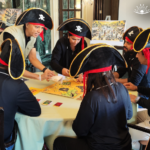
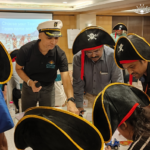
At SimuRise, we believe middle managers do not transform through information alone. They transform when they experience the realities of leadership, reflect on their behavior, and apply new insights back at work.
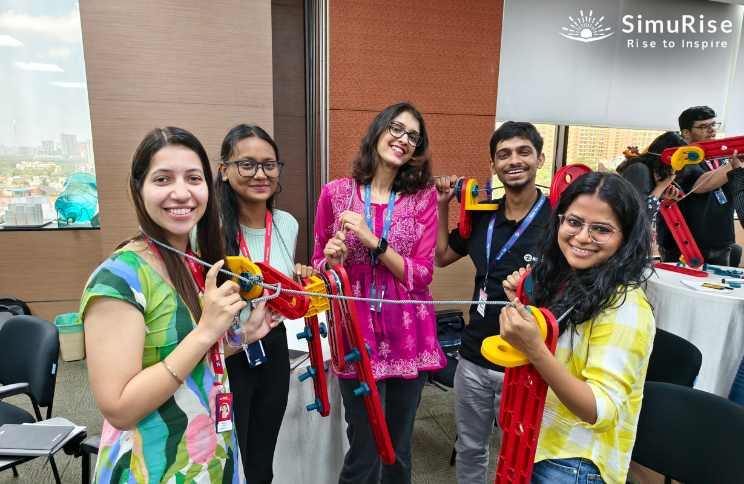
Our experiential learning interventions and business simulations help middle managers practice the exact capabilities required for execution: collaboration, decision-making, ownership, resourcefulness, strategic thinking, communication, and change agility.
Through simulations such as The Quest for King Solomon’s Mines, The Search for the Lost Dutchman’s Gold Mine, FreshBiz, Diamonds of Amazonia, and Square Wheels to Round Wheels, managers experience what happens when teams work in silos, delay decisions, hoard resources, or fail to align with the bigger goal.
The simulation creates the experience. The debrief creates the insight. The action plan creates a workplace application.
This helps middle managers move from bottlenecks to builders — from passive translators of strategy to active drivers of execution.
Key Takeaways
- Middle managers are the bridge between strategy and execution.
- When they lack clarity, authority, support, or capability, execution slows down.
- Polite resistance is one of the most dangerous signs of pressure from middle management.
- AI and automation are increasing the need for faster decisions and flatter execution systems.
- Organizations must develop middle managers in the areas of purpose clarity, autonomy, capability, and psychological safety.
- Experiential learning helps managers practice execution behaviors in realistic, safe, and reflective environments.
Conclusion
Middle managers are not the problem. They are the key.
When unsupported, they become bottlenecks. When empowered, they become accelerators of strategy, culture, engagement, and performance.
Organizations that want better execution must invest seriously in the middle layer. They must give managers clarity, authority, capability, and safety to lead.
Because strategy does not become reality when it is announced.
It becomes reality when middle managers translate it into action every day.
If you want to strengthen your middle managers and help them drive strategy execution with confidence, reach out to marketing@simurise.com or connect with Annie at +91 9082381193.