Introduction
Employee onboarding is often treated as an administrative process. New employees join the organization, complete documentation, attend induction sessions, meet a few leaders, learn about policies, and receive an overview of the company’s history, structure, values, and expectations.
All of this is necessary.
But it is not enough.
The real purpose of onboarding is not just to help employees understand the organization. It is to help them belong, align, contribute, and perform faster.
This is where many onboarding programs fall short. They provide information, but they do not always create an emotional connection. They explain values but do not always help employees experience them. They introduce teams but do not always build trust, collaboration, or confidence.
In a workplace where employees expect meaningful experiences from day one, organizations need to rethink onboarding. They need to move from passive induction to experiential onboarding programs that help new employees learn by doing, reflecting, interacting, and applying.
Experiential learning can transform onboarding from a checklist into a powerful culture-building intervention.
Why Traditional Onboarding Often Falls Short
Most onboarding programs are created with good intentions. The challenge is not the lack of effort; it is the lack of experience-led design.
Traditional onboarding programs are usually centered around transferring information to new employees. New hires are given information about the company, its policies, products, processes, and values. They may also attend multiple presentations from different departments covering compliance, HR policies, IT systems, business expectations, and organizational guidelines.
While this information is important, new employees are often looking for answers to deeper questions:
- Am I a part of this organization?
- What behaviors are valued here?
- How do people work together here?
- What does success look like in this organization?
These questions cannot be fully answered through slides. They need to be answered through experience.
When onboarding is overloaded with information, new employees may remember some content but may not truly understand the culture. They may understand the organization’s values intellectually, but they may not know how to apply them in real workplace situations involving new people, teams, and expectations.
As a result, the start becomes slower. New employees take longer to build confidence, become productive, and align with how the organization operates.
What Are Experiential Onboarding Programs?
Experiential onboarding programs help new employees experience what it means to be part of the organization, rather than just hearing information about the company.
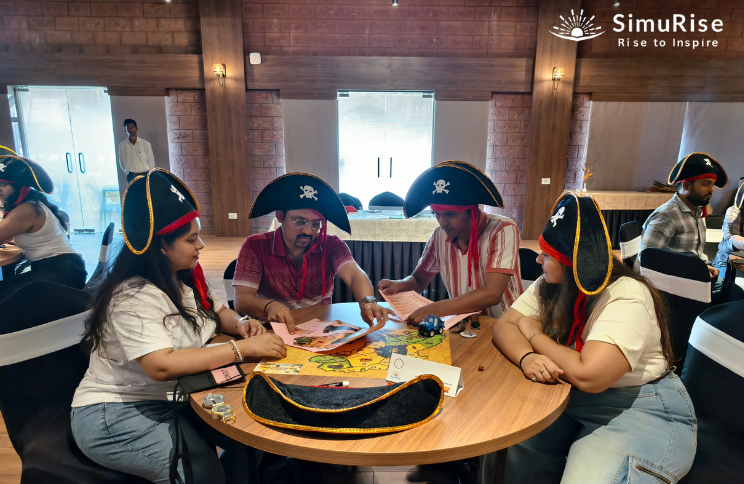
These programs use activity-based experiences, simulations, team challenges, business scenarios, reflective conversations, and facilitated discussions to help new employees understand the company’s culture, vision, values, collaboration expectations, and decision-making bebehaviorsExperiential onboarding allows new employees to participate in team challenges, solve business problems, practice real-life workplace situations, reflect on company values, and interact meaningfully with peers, leaders, and facilitators.
The purpose of experiential onboarding is not entertainment. The purpose is to help new employees integrate into the organization’s culture more quickly and meaningfully.
A well-structured experiential onboarding program helps new employees:
- Understand the organization beyond policies and presentations.
- Experience the organization’s vision, values, and culture through action.
- Build trust and relationships with new colleagues.
- Develop confidence in collaboration, communication, and decision-making.
- Understand how their role contributes to the organization’s overall success.
Experiential onboarding is a more human, memorable, and behavior-based approach.
Why Experiential Learning Works So Well in Onboarding
Experiential learning works because it reflects how people naturally learn. Human beings do not internalize important lessons only by listening. They learn deeply when they experience something, reflect on it, and connect it to real life.
This is especially important during onboarding because the first few days and weeks shape how employees interpret the organization.
If onboarding is passive, employees may experience the organization as procedural. If onboarding is immersive, they begin to experience the organization as purposeful, collaborative, and values-driven.
Experiential onboarding creates impact in three powerful ways.
1. It Turns Company Values into Lived Behaviors.
Many organizations spend time explaining their values during onboarding. They may talk about ownership, collaboration, innovation, customer centricity, integrity, or excellence.
But new employees often struggle to understand what these values actually look like in everyday work.
Experiential learning solves this by placing participants in situations where values must be practiced.
For example, if collaboration is a core value, employees can participate in a team simulation where success depends on sharing information, asking for help, and aligning with others. If ownership is a core value, they may find that waiting for instructions leads to poor outcomes, whereas initiative drives progress.
This helps employees understand that values are not just words on a wall. They are choices people make under pressure.
2. It Builds Early Relationships and Trust
One of the biggest challenges new employees face is social integration. They may not know whom to approach, how to ask questions, or how to build connections across teams.
Experiential onboarding creates natural interaction.
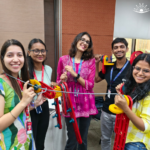
When participants solve a challenge together, they communicate, laugh, debate, plan, and support each other. These shared experiences create stronger connections than formal introductions alone.
This matters because people who feel connected early are more likely to ask for help, speak up, and engage actively with the organization.
3. It Reduces Time to Productivity
The faster employees understand how the organization works, the faster they can contribute.
Traditional onboarding may explain processes, but experiential onboarding helps employees practice workplace behaviors such as decision-making, communication, prioritization, collaboration, and problem-solving.
This reduces uncertainty and builds confidence.
When employees leave onboarding with practical insight into how teams collaborate, how decisions are made, and what behaviors are expected, they are better prepared to perform in their roles.
The Culture Advantage: Onboarding as a Values Intervention
Onboarding is a powerful opportunity to influence culture.
Every new employee joins with curiosity and openness. They are trying to understand not only what the organization does but also how it works.
This makes onboarding an excellent opportunity to embed organizational values.
However, values cannot be embedded through explanation alone. Employees need to experience those values.
Through an experiential onboarding program focused on culture, employees are able to ask themselves:
- What does ownership look like in this organization?
- How do we collaborate when competing goals arise?
- How do we make decisions when information is incomplete?
- What does customer-centricity look like in action?
- How do we balance individual performance and team success?
- When should we ask for help instead of working alone?
These conversations deepen the understanding of culture as lived behavior.
This is especially valuable for organizations that are growing quickly, hiring many new employees, or integrating people from different regions, functions, or business units.
What Experiential Onboarding Should Include
An effective experiential onboarding program should not be random. It must be intentionally designed around the organization’s culture, values, and business expectations.
Here are the key elements that make it work.
1. A Strong Business Context
New employees need to understand the organization’s broader purpose. The onboarding experience should help them see how the business creates value, whom it serves, what challenges it faces, and how different functions contribute to success.
This helps employees move beyond role-level thinking and understand the enterprise perspective.
For example, a simulation can show how one team’s decision affects another team’s outcome. This helps new employees understand interdependence early.
2. Values-Based Experiences
If the organization values collaboration, ownership, agility, or innovation, the onboarding experience should include activities that require those behaviors.
This is more powerful than simply showing a slide with company values.
A well-designed activity can help employees experience the difference between working in silos and working as one team. It can help them see how resourcefulness, communication, and accountability influence outcomes.
3. Reflection and Debriefing
The experience is only one part of the process. The real learning happens during reflection.
After each activity or simulation, participants should be guided to reflect on what happened, why it happened, and how it connects to the workplace.
Good debrief questions include:
- What helped the team succeed?
- What slowed us down?
- Where did we communicate well?
- Where did assumptions create confusion?
- How did our actions reflect the organization’s values?
- What will we apply in our roles from day one?
This reflection converts activity into insight.
4. Peer Connection and Team Bonding
Onboarding should help employees build relationships. Experiential formats naturally create peer bonding because participants are not just sitting together; they are solving, deciding, and reflecting together.
These early relationships can become support systems as employees settle into the organization.
5. Action Planning
A strong onboarding experience should end with an application. Employees should leave with clarity on what they will do differently in their first 30, 60, and 90 days.
This could include commitments around asking questions, collaborating across functions, taking ownership, learning faster, or living specific organizational values.
Examples of Experiential Onboarding in Action
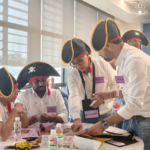
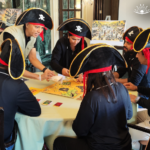
Imagine a new employee joining a fast-growing company. Instead of beginning with content-heavy presentations, they participate in a business simulation in which teams must work together to achieve a common goal with limited resources.
At first, some employees may focus only on achieving their own team’s goal. Others may hesitate to ask for help. Some may assume that competing against other teams is the best way to win.
As the experience progresses, they begin to realize that the best outcomes come when teams share information, align quickly, optimize resources, and think beyond individual success.
Once the simulation is complete, the facilitator connects the experience back to the company’s values. New employees reflect on collaboration, ownership, resourcefulness, creativity, and entrepreneurial thinking.
This type of onboarding experience does not just tell employees what it means to work in the organization. It helps them experience what the organization expects from them.
Another example could involve new managers participating in an experiential onboarding activity focused on decision-making, coaching conversations, and conflict resolution. They experience how they are expected to lead within the organization and get an opportunity to practice leadership behaviors in a safe environment.
How Experiential Onboarding Supports HR and Business Goals
Experiential onboarding is not only beneficial for the employee experience. It also directly supports business priorities.
When organizations implement experiential onboarding, they create opportunities for:
- Employee Engagement: Employees begin their journey feeling included, excited, and connected.
- Retention: A strong onboarding experience can create better alignment between employees and the organization.
- Consistent Culture: Values are experienced consistently across cohorts, locations, and business units.
- Collaboration: Early experiences help build networks and habits of communication and teamwork.
- Productivity: New hires develop clarity and confidence faster.
- Leadership Readiness: New managers and high-potential employees start practicing expected behaviors earlier.
This makes experiential onboarding a strategic investment, not merely an HR initiative.
How SimuRise Helps Transform Employee Onboarding
At SimuRise, we believe people do not change through information alone. They change through experience, reflection, and application.
This belief is especially relevant for onboarding.
Through experiential learning workshops and business simulations, SimuRise helps organizations design onboarding experiences where employees do not just hear about values, culture, and collaboration. They experience them.
Our simulations and learning activities can help new employees explore behaviors such as ownership, teamwork, resourcefulness, communication, decision-making, and agility in a safe and engaging environment.
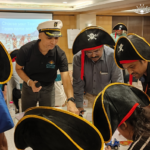
For example, simulations such as The Quest for King Solomon’s Mines, The Search for the Lost Dutchman’s Gold Mine, FreshBiz, Diamonds of Amazonia, and Square Wheels to Round Wheels can help onboarding cohorts understand how teams collaborate, how decisions affect outcomes, how resources must be optimized, and how organizational roadblocks can be overcome together.
- The experience creates engagement.
- The debrief creates awareness.
- The action plan creates a workplace application.
This is how onboarding becomes more than induction. It becomes a foundation for culture and performance.
Conclusion
The onboarding experience is one of the most important milestones in the employee lifecycle. It shapes how employees perceive the organization, connect with its culture, and understand their contribution.
Traditional onboarding focuses on giving new employees information. Experiential onboarding gives them meaning.
It helps new employees understand not only what the organization believes, but how it acts. It helps them translate organizational values into action, policies into practice, and culture into lived experience.
Organizations that want to increase engagement, enhance productivity, and build stronger cultural alignment should think of onboarding as an experiential journey rather than a series of administrative events.
If you want to design experiential onboarding programs that help employees connect with your culture, live your values, and contribute faster, reach out to us at marketing@simurise.com or call Annie at +91 9082381193.