Introduction:
Organizations have long considered learning synonymous with activity if workshops are being offered, if leaders are attending programs, or if they are completing certifications, then learning is occurring. This assumption has shaped the way that corporate development functions operate in a relatively low-profile manner for years.
However, when organizations take the time to pause and look at their results closely, a different picture emerges:
Leaders continue to struggle with making decisions under pressure.
Teams continue to operate in silos despite participating in numerous collaborative work sessions.
High-potential employees have plateaued and failed to develop into high-performing leaders.
The problem is not one of effort or intent.
The problem appears to be one of structure.
Most organizations are still creating learning as a series of isolated events while hoping for results that can only occur through ongoing behavioral development.
It is at this point that the notion of an organization’s corporate learning journey becomes a key consideration, if not an absolute requirement.
The Fundamental Misalignment: Why Training Doesn’t Translate into Behavior
The failure to develop and implement an effective learning journey is not the fault of the individuals involved. It is a design flaw.
To fully appreciate the value of learning journeys, we must first explore the disconnection between how most organizations approach learning and development.
To date, most organizations have to operate from a simple, traditional view of training:
“If people are exposed to the right ideas, they will enact those ideas.”
This perspective does not accurately reflect how we develop and change our behavior.
Our behavior is shaped by:
- Habits we have developed over many years,
- We are under environmental pressures and constraints,
- Social dynamics within a team or organization,
- Emotional responses to uncertainty.
A one-day workshop cannot be expected to change years of habitual behavior one may have developed.
What typically happens is very predictable.
Participants become engaged in developing their learning in the workshop. They can identify some of the ideas presented to them and feel inspired to take action on the ideas. However, when they return to their workplace, many environmental factors pull them back into their previous habits.
They will quickly feel the pressure of meeting deadlines.
- They will quickly feel the pressure from the stakeholders who depend upon them for successful performance.
- They will quickly experience the same team dynamics they experienced previously.
Therefore, within a few days, they will forget the value of what they learned in the workshop. This is due to the lack of sustained support and reinforcement of their new behaviors when they return to work.
What Is a Corporate Learning Journey And Why It Changes Everything
Learning journeys at an organization amplify development as an ongoing process, rather than an isolated event. Learning journeys are structured, multi-step experiences that unfold over time, deliberately designed to support individuals as they move through each phase of their transformational journey.
Unlike traditional training, learning journeys don’t assume that understanding is sufficient to change behavior. Learning journeys recognize that in order to change, we must:
- Have repeated exposure to ideas,
- Have the opportunity to apply our newfound knowledge in reality,
- Reflect on what we learned, did, and the results we obtained,
- Have support from others through verification and adjustments based on what we have experienced.
To summarize, learning journeys reflect the way we learn as human beings throughout our lives. We don’t change just because we have had one learning experience, but because we have had many experiences, reflected on them, adjusted based on that reflection, and replicated the experience. Learning journeys provide a systematic way to create and execute this process.
Why Learning Journeys Have Become a Strategic Imperative
Learning journeys are becoming increasingly important in the workplace and are being developed in response to changes in how people work. We live in an unpredictable world and need leaders with diverse leadership skills. Leaders’ ability to make decisions based on complete information is no longer possible; they will need to act on partial, sometimes incomplete, information and make decisions based on the consequences of those decisions after they are made.
The need for collaboration between teams has also increased due to the fast pace of change; however, most teams lack the proper structures to work together successfully and therefore are not utilizing their full potential. Since the pace of change is so fast, many processes will become ineffective after six months; therefore, organizations cannot rely on learning that occurs at specific points in time.
Organizations should focus on developing leaders through continuous learning rather than relying solely on formal training on occasion. Learning journeys enable this by creating a structured process that supports continuous development and integrates into how leaders conduct themselves in their daily roles.
The Anatomy of an Effective Learning Journey
A properly created educational journey is not merely a longer program. It is a new way of building a program.
At the heart of a learning journey are four fundamental components, each reinforcing the others.
1. The use of experience: learning through real-life situations
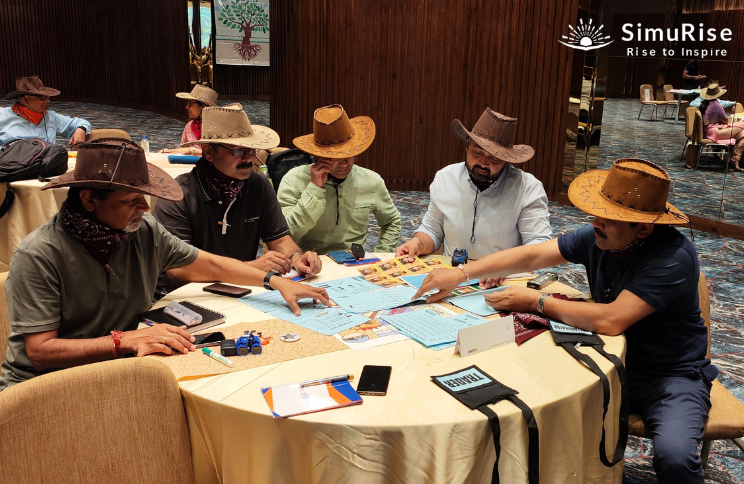
Experience teaches us more than instructions will. The best learning journeys provide opportunities to engage in simulations, solve problems using real-world examples, or participate in immersive experiential exercises that reflect the complexity of what people face in the workplace.
Leaders placed in these situations must make difficult decisions, operate amid uncertainty, and collaborate under intense pressure. The behaviors that occur during these experiences are often unseen when participants are engaged in traditional learning environments.
An example of this is a leader who believes he/she is collaborative, yet when faced with intense pressure in a simulation, he/she reverts to working alone. These “ah-ha” moments cannot be produced through lectures.
2. The use of reflection: making sense of behavior
Experience is not enough; experience without reflection is simply an action.
Reflection allows an experience to be transformed into understanding.
As part of a structured learning journey, participants are facilitated through the process of analyzing:
- What decisions were made?
- What were the reasons for making the decisions?
- What assumptions did the participant have that influenced their thought processes?
- What impact did these decisions have on the final outcome?
It is through this reflection process that leaders identify the gaps that exist between intention and behavior.
It is also where discomfort often arises, and that discomfort is valuable. Because it signals awareness.
3. Application: Bridging Learning and Work
One of the most critical differentiators of a learning journey is the emphasis on real-world application.
Between sessions, participants are expected to apply what they have learned in their day-to-day roles.
This could involve:
- Changing how they approach decision-making
- Experimenting with new ways of collaborating
- Handling conflicts differently
- Practicing strategic thinking in real business scenarios
The application ensures that learning is not confined to the classroom. It becomes part of the leader’s operating system.
4. Reinforcement: Building Consistency Over Time
Behavioral change does not happen instantly. It requires repetition.
Learning journeys are designed to reinforce key ideas over time through:
- Follow-up sessions
- Coaching conversations
- Peer discussions
- Feedback loops
This repetition gradually shifts behavior from conscious effort to natural habit.
And that is when transformation becomes sustainable.
3. Applying what I learn to my job:
When people learn something on a journey, the most important part of that experience is the real-world application of what they have learned. Part of learning is to use what you learn in your everyday work between sessions of your journey. Examples of how you might use this include:
- Changing how you make decisions/approach the decision-making process
- Experimenting with new ways to work with others (collaboration)
- Using different techniques for resolving conflict
- Applying strategic thinking to real-world business scenarios.
Application means that what is learned will not only be used in the classroom but will also become part of the leader’s operating system.
4. Reinforcing learning over time:
Change does not occur overnight; it takes time and effort to change behavior. Learning journeys are designed to help reinforce key concepts over time in different ways, such as:
- Follow-up sessions
- Coaching conversations
- Conversations with peers
- Feedback loops
As participation in these events becomes repeated, behaviors begin to shift from conscious effort to habit. That is when lasting transformation can take place.
How Organizations Can Design and Apply Learning Journeys
Learning journeys can be powerful and can deliver results if designed and implemented correctly. The initial focus should always be aligned with the business’s direction. Organizations must define objectives or outcomes to achieve. For instance, are they trying to enhance cross-functional teamwork, improve decision-making, and develop a growth mindset?
If outcomes are not defined, learning journeys will likely become generic.
Once the objectives or outcomes have been established, organizations need to identify the leadership gap preventing them from achieving them. This step involves an honest assessment of how leaders are currently behaving in ways that limit performance.
From this point forward, the learning journey can be designed in phases, typically beginning with awareness, progressing through skill development, and culminating in activity execution.
However, the process is not sufficient. Application is where many organizations struggle.
For learning journeys to succeed, they need to be integrated into the organization’s normal delivery of work to the point where leaders consistently contribute to their successful application. Managers need to continually reinforce the application of learning within their teams and provide regular reviews of the organization’s progress against expectations.
Most importantly, learning must be viewed as part of the organization’s work rather than being separate from it.
The Role of Experiential Learning in Accelerating Journeys
One of the most effective ways to accelerate a learning journey is through experiential learning.
Experiential learning compresses time. It allows leaders to encounter complex challenges, make decisions, and see consequences within hours, something that would otherwise take months in real life.
More importantly, it creates emotional engagement.
People may forget what they hear, but they rarely forget what they experience,e especially when that experience challenges their assumptions.
When experiential learning is embedded within a larger journey, it acts as a catalyst. It creates powerful moments of realization, which are then reinforced through reflection and application.
Why Learning Journeys Drive Real Business Outcomes
The true value of learning journeys lies in their impact on business performance.
When leaders go through a structured journey, several shifts begin to emerge.
Decision-making becomes more deliberate and confident, even in uncertain situations. Teams align more effectively when collaboration is practiced, not just discussed. Ownership increases as leaders take responsibility for outcomes rather than waiting for direction.
Over time, these shifts compound.
What begins as individual development gradually becomes organizational capability.
And that is where the real ROI lies: not in the number of programs conducted, but in the quality of decisions made across the organization.
Conclusion
The world of work has changed. Complexity has increased. The pace of decision-making has accelerated. The cost of poor leadership has become more visible.
Yet, in many organizations, learning has not evolved at the same pace.
As long as development continues to be treated as an event, outcomes will remain inconsistent.
Learning journeys offer a different path.
They recognize that transformation is not immediate. It is built over time through experience, reflection, application, and reinforcement.
Organizations that embrace this approach will not just develop better leaders.
They will build systems that continuously produce them.
And in a world where adaptability is the ultimate advantage, that may be the most important capability of all.
📩 marketing@simurise.com
📞 Annie: +91 9082381193