Making High Impact Leadership Decisions Under Pressure – A key characteristic of successful companies is their ability to make decisions quickly under stress. Using their talents and previous experiences, many leaders do not successfully execute decisions when faced with high-stakes and time-compressed situations.
In these sorts of situations, the dynamics of the market change; customers continually add pressure and urgency to companies; company goals are forced to accelerate; and rival businesses continually change their pace of execution. When pressured, leadership will rely less upon their position of authority than upon clearly established values, vision, and courage.
The question we need to answer is, “Why do qualified leadership teams fail to make quality decisions under pressure?” Next, we will explore how to improve leadership decision-making capability under stress.
The Hidden Reality of Leadership Decision-Making Under Pressure
Calm decision-making and pressure decision-making are distinctly different acts.
When making decisions under pressure, leaders are required to:
- Act with less than complete information
- Balance competing stakeholder expectations
- Manage team emotional responses
- Maintain performance while ensuring team morale
The cognitive burden increases, the emotional stakes rise, and the risk tolerance varies; and this combination produces the evidence of fracture within an organisation. Decision-making under pressure is not only a technical skill, but it is also a relational skill that teaches strategic capability through psychology.
Psychological Barriers That Derail Leaders
1. Fear of Consequences
One of the most underestimated barriers to strong leadership decision-making is fear. Fear of being wrong. Fear of criticism. Fear of reputational damage. Fear of financial loss.
The fear of “making the wrong call” can lead to:
- Analysis paralysis
- Delayed execution
- Over-consultation
- Defensive decision-making
Ironically, teams often lose more through indecision than through imperfect but timely action. In fast-moving environments, delayed clarity creates confusion across the organisation.
2. Cognitive Overload and Decision Fatigue
Senior leaders make dozens, sometimes hundreds, of decisions daily. Over time, mental bandwidth depletes.
Decision fatigue leads to:
- Oversimplifying complex issues
- Avoiding strategic calls
- Relying too heavily on instinct without validation
- Inconsistent judgment
In high-pressure leadership environments, clarity erodes faster than leaders realise.
3. Groupthink and Artificial Harmony
In leadership teams, especially well-established ones, the desire to maintain cohesion can suppress dissent.
Under pressure, teams may:
- Avoid challenging dominant voices
- Rush to consensus
- Overvalue alignment over accuracy
Strategic decision-making suffers when diverse perspectives are muted.
Organisational Factors That Make It Worse
Leadership decision-making under pressure is rarely just an individual failure. Often, it is systemic.
1. Conflicting Priorities
Revenue vs. culture.
Short-term targets vs. long-term sustainability.
Speed vs. risk mitigation.
Without clear decision criteria, leaders struggle to balance competing priorities.
2. Lack of Role Clarity
When ownership is ambiguous:
- Decisions stall
- Accountability diffuses
- Responsibility becomes collective and therefore vague
High-pressure leadership requires clear authority lines and defined decision rights.
3. Poor Information Flow
Too much data overwhelms. Too little data paralyses.
Delayed information disrupts timing.
Effective decision-making challenges in leadership often stem from poorly structured information systems, not poor intelligence.
The Business Impact of Weak Decision-Making
When leadership teams struggle with decision-making under pressure, the consequences ripple outward.
Impact on Teams
- Erosion of trust
- Reduced psychological safety
- Confusion around direction
- Decreased ownership
Impact on Performance
- Missed opportunities
- Slower execution
- Reactive rather than strategic moves
- Inconsistent results
Impact on Leaders
- Burnout
- Stress accumulation
- Self-doubt
- Reduced confidence
Leadership accountability becomes heavier when decisions feel fragile.
Why Pressure Changes the Game
Pressure amplifies everything.
It amplifies:
- Biases
- Ego
- Fear
- Assumptions
- Emotional triggers
It also exposes:
- Cultural misalignment
- Weak collaboration
- Poor cross-functional coordination
In essence, high-pressure leadership situations reveal the true maturity of a leadership team.
That is why decision-making under pressure cannot be “trained” only through theory. It must be practised in simulated, realistic conditions.
How Leadership Teams Can Decide Better Under Pressure
Improving leadership decision-making under pressure requires both structural and behavioural shifts.
1. Establish Clear Decision Frameworks
Leaders must clearly define:
- What constitutes a strategic decision
- Who owns which decisions
- What criteria guide trade-offs
- What level of risk is acceptable
Clarity reduces hesitation and prevents emotional reactions from dominating logic.
2. Use the 80/20 Principle
Perfectionism kills momentum. Leaders should aim for 80% clarity and move, especially in dynamic markets.
Progress beats precision in high-pressure environments. Waiting for perfection often means missing an opportunity.
3. Encourage Constructive Dissent
High-performing leadership teams intentionally invite alternative viewpoints. Some assign “devil’s advocate” roles to ensure assumptions are tested.
- Invite alternative viewpoints
- Assign “devil’s advocate” roles
- Reward critical thinking
Disagreement, when structured, strengthens decision quality and reduces blind spots.
4. Conduct Decision Audits
After major decisions, reflection is critical.
- What worked?
- What assumptions were flawed?
- What signals were ignored?
This disciplined review process builds strategic decision-making muscle over time.
5. Build Psychological Safety
Teams that feel safe to admit uncertainty, challenge ideas, and take calculated risks consistently make stronger decisions under pressure.
- Admit uncertainty
- Challenge ideas
- Take calculated risks
and make better decisions under pressure.
Without safety, fear dominates discussion. With safety, clarity emerges.
Building a Decision-Ready Leadership Culture
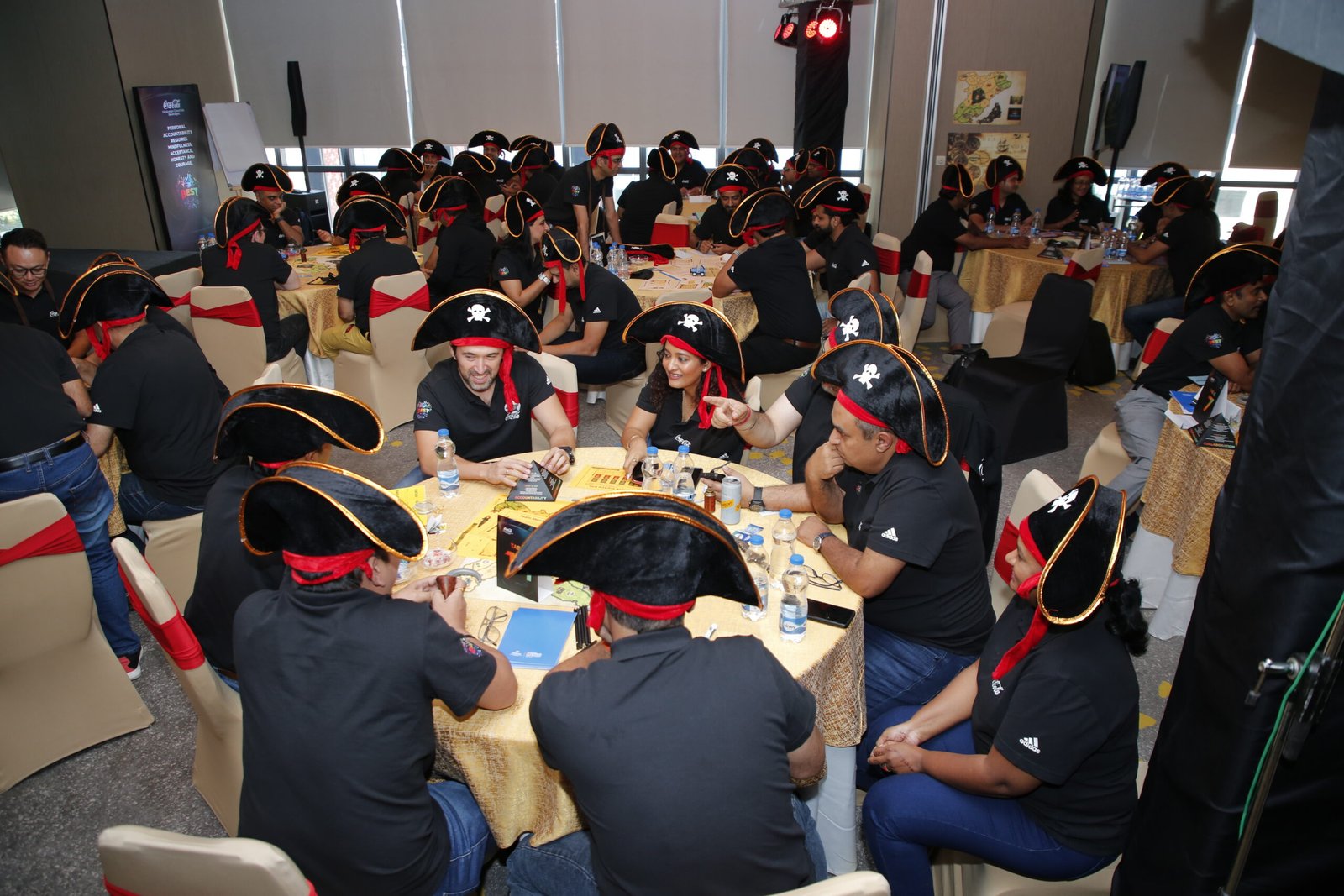
The strongest leadership teams do not wait for crises to improve. They rehearse.
They simulate:
- Resource constraints
- Competitive pressure
- Cross-functional conflict
- Strategic ambiguity
They practice navigating uncertainty before real stakes emerge.
This transforms leadership decision-making under pressure from reactive chaos to structured confidence.
Because in reality, leadership is not about avoiding pressure.
It is about building the capability to thrive within it.
Conclusion
Most leadership teams have difficulty making decisions when they feel pressured. Reasons for this include that pressure significantly highlights weaknesses at both personal and organisational levels. However, this same pressure can also create opportunities to build on resilience, create alignment, and clarify strategy. In addition, leaders can gain traction and momentum through:
- clarifying decision rights
- creating a safe environment for debate
- managing cognitive overload
- developing the ability to think critically about high-stakes situations.
Leadership decision-making, when faced with pressure, is less about rightness and more about decisiveness and adaptability and is a necessity in the current, rapidly changing business climate if you want a competitive advantage.
For more information, reach out to us at marketing@simurise.com | 0845-208-4442 /
0932-498-0145.