L&D leaders today are confronted by an important question: what really changes human behaviour? After spending lakhs on workshops and training, what makes certain that employees will try out what they’ve learned back at work?
“People don’t learn from experience, they learn through reflecting on experience“ – John Dewey
On the other hand, experiential learning methods enable individuals to “learn by doing” is proving to be far more effective in developing leadership skills, critical thinking, and collaboration. So why should organisations shift their focus from traditional training to experiential learning methods? Let’s explore the reasons why experiential learning drives greater impact in leadership development, team-building initiatives, and organisational growth.
That’s exactly what experiential learning offers: a hands-on, engaging, “learn-by-doing” approach that actively involves the participants. Unlike conventional learning approaches that are passive and involve listening, experiential learning immerses learners in real-life situations, thinking, feeling, and acting.
In an era where agility, collaboration, and leadership are critical, experiential learning is one of the most influential approaches for corporate development.
What Actually Changes Human Behaviour?
Behavioural change does not occur as a result of memorising theories or attending workshops consisting mostly of PowerPoint slides. Behavioural change occurs when people encounter experiences, reflect on those experiences, and internalise the results of those experiences.
Experiential learning creates the situations for behavioural change to happen through various stages of immersive experience, simulations, roleplays, and team challenges that replicate real-world workplace activities. Learners do not just hear the concepts; they experience them. It’s that shift from understanding to applying knowledge and behaviours that drive sustainable change.
Experiential Learning vs. Traditional Learning
Experiential learning methods transform corporate training by shifting from a passive to an active learning approach. Instead of just consuming information, participants engage in simulations, role-playing, decision-making challenges, and collaborative exercises that mirror real-world business scenarios. This process allows learners to experience the consequences of their decisions, reflect on their strategies, and refine their problem-solving skills.
| Feature | Experiential Learning | Traditional Learning |
| Method of Delivery | Real-life simulations, games, and roleplays | Lectures, slides, and written materials |
| Learner Involvement | Active engagement and decision-making | Passive listening |
| Feedback Mechanism | Immediate and personalised feedback | Delayed or generic feedback |
| Focus | Learning by doing and reflecting | Absorbing information |
| Behavioural Impact | Deper recall and real-world application | Limited retention and action |
While traditional methods may be useful for transferring information, experiential learning drives transformation, building capabilities that stick.
Why Traditional Training Often Misses the Mark
Low Engagement: Conventional training environments often feature heavy lecture periods, leaving little opportunity for engagement. People may listen, but they seldom capture what is stated.
The Forgetting Curve: Studies suggest that unless people practice what they learn, on average, they can forget 90% of their learning over the course of a month.
No Safe Zone to Fail: In formal formats, participants do not experience the opportunity to practice their learning. Experiential learning provides a space to experiment, fail, and grow, without risk.
To summarise, traditional learning informs, whereas experiential learning transforms.
Experiential Learning: Learning That Sticks
Experiential learning engages both the intellect and the emotional mind. It engages the head, the heart, and hands- the participants think, feel accountable, and act.
Experiential learning provides a simulation of actual workplace dynamics, where employees can make decisions in the moment, experience the consequences, and reflect afterwards, leading to deep behavioural insight.
Whether it be leadership development, collaboration, or problem solving, experiential learning creates “aha” moments that enable actual growth.
Key Benefits of Experiential Learning
1. Bridges the gap between theory and practice
Learners use the concepts immediately.
2. Increases engagement and collaboration
Participants co-create, discuss, and problem-solve.
3. Improves memory retention
Experiences are far more memorable than slides or lectures.
4. Builds critical workplace skills
From communication and teamwork to decision making.
5. Encourages continuous learning
Participants are reflective, adaptable, and make continuous improvements.
6. Delivers high ROI
Learning transfers into real behavioural change that can be measured in performance outcomes.
Why Organisations Are Investing in Experiential Learning
“Leadership, like swimming, cannot be learned by reading about it,” said keynote management thinker Henry Mintzberg. That is why progressive organisations are using experiential learning to foster ongoing growth and adaptability. These initiatives push people out of their comfort zones, foster collaboration, and prompt a change in mindset that typical learning does not offer, focusing on getting learning done, but not forgetting any of the outcomes in previous learning experiences.
Business simulations, leadership labs, and live projects are used by companies to allow employees to find solutions for issues with which they are familiar in controlled settings that encourage confidence, creativity, and team cooperation.
Benefits and Importance of Experiential Learning
For employees, experiential learning establishes a strong relationship between action and understanding, and supports critical thinking, communication, and problem-solving, which are critical competencies for success in today’s complex workplace.
For organisations, experiential learning demonstrates how employees respond to pressure, teamwork, and their attitudes about change. Experiential learning can give organisations valuable insight into employees’ leadership potential and growth areas
In short, experiential learning can help develop not only skills but mindsets that promote ownership, agility, and resilience.
Application Areas of Experiential Learning
Experiential learning can be applied across a wide range of leadership and behavioural areas, especially where human attitude and collaboration are key. Some core applications include:
- Team Building & Bonding
- Trust Building
- Collaboration & Communication
- Decision Making & Strategic Thinking
- Innovation & Creativity
- Customer Focus & Confidence Building
- Leadership Development Programs
- Management Development & Coaching
- Change Management & Organisational Effectiveness
- Cross-Functional & Cross-Cultural Teams
- Virtual & High-Performance Teams
- Goal Setting
These areas are best suited to experiential formats because they require behavioural transformation, not just conceptual understanding.
Popular Experiential Learning Methods
Modern experiential learning leverages several innovative and immersive formats:
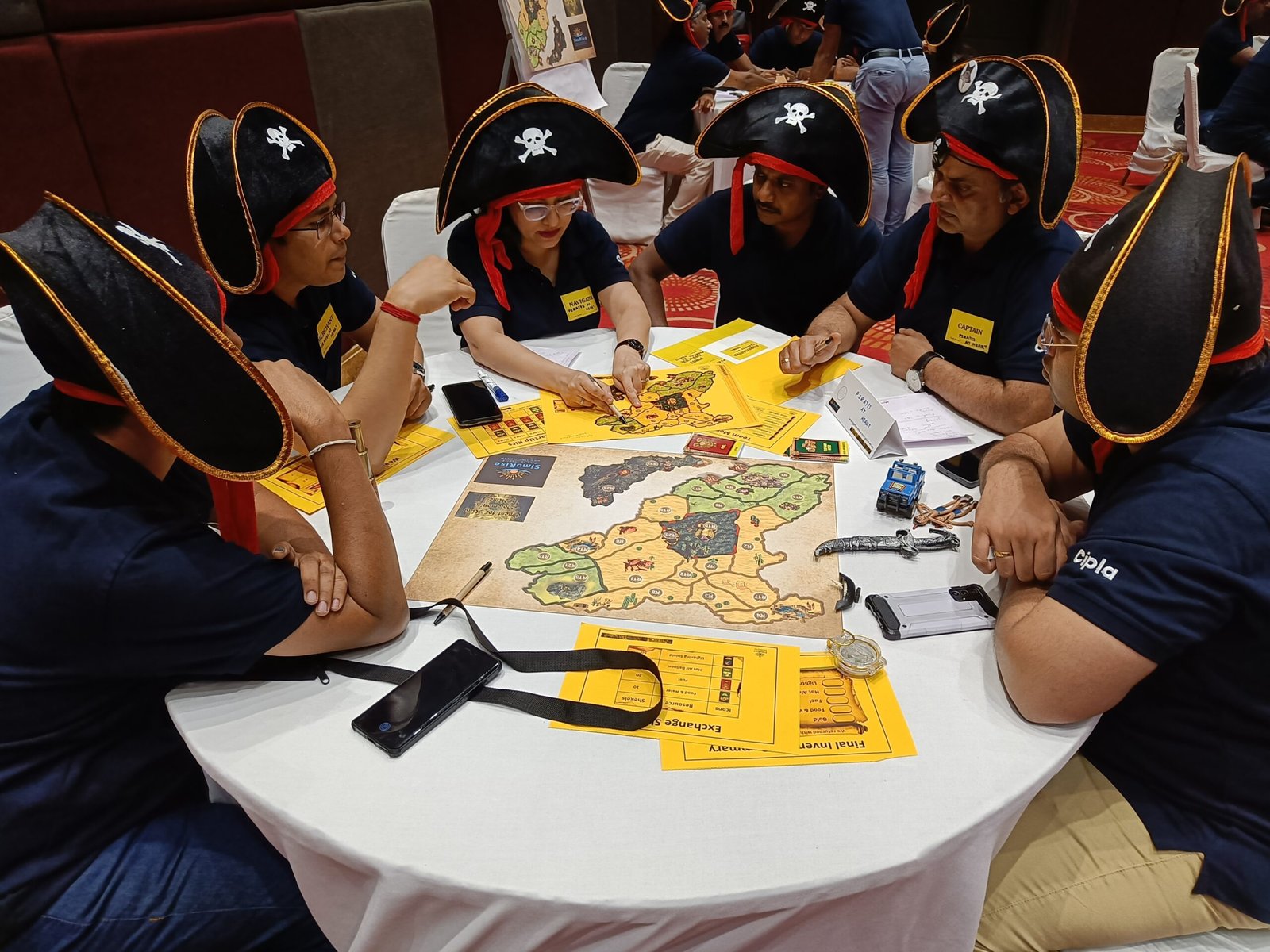
- Simulation-Based Learning – use realistic business situations to assess decision-making and leadership skills.
- Game-based Learning – use interactive board games and digital experiences to engage learners.
- Outbound and Adventure-Based Learning – build trust and teamwork using outdoor learning experiences.
- Scenario-Based Roleplays – allow participants to practice conversations and leadership situations in a safe space.
- Virtual and Hybrid Team Activities – ideal for today’s remote and cross-functional teams.
- Storytelling, Art, and Theatre-Based Learning – improve creativity and empathy.
Each of these methods makes learning more engaging, human, and impactful.
The ROI of Experiential Learning
Beyond engagement, experiential learning delivers measurable outcomes:
- Improved leadership capability and greater confidence in making decisions.
- More collaboration between teams and across departments.
- Increased retention and application of learning to real-world situations.
- Analytics-informed data based on simulation exercises and gamified assessments.
- Greater cultural alignment and improved employee satisfaction.
By shifting learning to an experiential format, organisations are able to achieve both improved performance and long-term behavioural change.
How SimuRise Can Help
SimuRise’s focus is on being a firm partner that helps organisations realise tangible business results through leadership development and behaviour transformation. Working with clients, our proven process integrates reflection and collaborative activity along with real-world decision-making to achieve desirable shifts in mindset, performance and execution. We do not consider learning to be an event in itself; therefore, we incorporate simulated experiences that support leaders with converting opportunities and insights into actionable results—this leads to increased alignment, improved clarity of thought, and ongoing influence on an organisation’s goals.
Our flagship experiential formats are:
- Board Simulations (like The Search for the Lost Dutchman’s Gold Mine, The Quest for King Solomon’s Mines, Diamonds of Amazonia, FreshBiz, etc.) to simulate decision-making and strategy.
- In-person business simulation learning journey for developing organisational culture and future readiness of your teams.
- Virtual game-based learning journey to develop Future readiness of your leaders and managers
- Blended Learning journeys to benefit the personal connection and convenience of your home/office.
Through these experiences, we guide learners to gain a better understanding of their insights, practice their new behaviours, and strengthen competencies that last.
Conclusion
- Traditional learning can inform.
- Experiential Learning can change the context.
With the integration of head and heart, experiential learning ensures that your employees do not just know the tenets of what to do, but they understand why and how to do it better.
If you want your teams to embrace agility, accountability, ownership, decision-making, and collaboration, supporting experiential learning is less of a training decision and more of a strategic decision to create stronger leaders and managers to achieve your organisational business outcomes.
Discover how SimuRise can help you bring experiential learning to life, driving real behavioural change and lasting impact.
If you want to equip your leaders with the skills they truly need and replace outdated training methods with high-impact experiential learning methods, reach out to marketing@simurise.com or call Annie at +91 9082381193 to explore how experiential learning can transform your workforce.