The work environment is changing rapidly. The hybrid model, globalisation, technology, shifting employee expectations, and unpredictable market conditions have transformed effective leadership. In this new work environment, collaborative leadership is not just another way of leading; it is the underpinning of how high-performing, future-ready organisations will engage and operate in 2026 and beyond.
The traditional command-and-control model of leadership is ill-equipped to operate in the fast-paced, complex, and uncertain modern business environment. Leaders need to be emotionally intelligent, cognitively inclusive, tech-savvy, and collaborative more than ever today.
The Shift from Survival to Growth Mindset. Workplaces that lack collaboration often fall into a survival mode—where teams operate in silos, resist change, and play it safe. But when leaders foster a culture of teamwork and shared accountability, organisations shift toward a growth mindset, unlocking new levels of innovation, efficiency, and success.
The New Leadership Reality in 2026
Leadership in 2026 is influenced by multiple forces happening simultaneously:
1. Compassion-Driven Leadership
Employees want leaders to be understanding, fair, and supportive, in addition to providing clear direction. Today’s workplaces are psychological ecosystems, wherein emotional well-being directly correlates with productivity, engagement, and adherence.
2. Leadership in Hybrid & Global Contexts
As teams are located in multiple locations and time zones, leaders must establish trust & engagement remotely, create practice for team norms, and communicate with clarity and consistency.
3. Responsible AI Uptake
Leaders need to understand AI, its use cases, and implications. Transparency in technology uptake is now a demand for trust and compliance.
4. Continuous Learning & Learning Agility
Because business models themselves are rapidly changing, leaders must embody a commitment to continuous learning, not only for themselves, but for and with their teams.
5. Sustainable & Purpose-Driven Leadership
Profit is no longer the only definition of success. Stakeholders and employees are increasingly demanding that organisations operate with responsibility and purpose.
6. DEI-Centric Leadership
Fairness, representative & building inclusive cultures are no longer HR jobs; they are fundamental leadership responsibilities.
7. Crisis-Ready Leadership & Stability
In light of the ongoing geopolitical, economic, and market uncertainty, leaders are expected to be resilient, stable, and ready to navigate through unpredictable environments.
When considered together, all of these trends point to the same truth: collaboration is the leadership skill to make all of the above happen.
Why Collaborative Leadership Matters (and is Non-Negotiable)
The demands of 2026 require leaders to move beyond “directing work” to “co-creating solutions.” Collaborative leadership is necessary for several important reasons, including the potential to:
- Connect teams and break through silos created by functions
- Drives innovation by coming up with shared ideas from diverse perspectives
- Strengthen relationships and psychological safety
- Speed up decisions in hybrid environments
- Maintain adaptability in times of change and disruptive uncertainty
- Enhance engagement by making people feel valued and heard
Lessons Learned in Business: Collaboration + Adaptability = Competitive Advantage
Several organisations in South Africa demonstrate the capability of agile, collaborative leadership:
- Takealot rapidly scaled since it adapted to the rise of e-commerce.
- Checkers Sixty60 used collaborative problem-solving to launch a carefully and strategically planned service that made a change in their competitive strategies
- Discovery Limited made innovative use of its knowledge and data beyond insurance to develop software
- Nando’s has creatively adapted to local markets without losing its global identity
- Capitec Bank was a product created from the designs of the banking process, which simplified and built a customer-centric culture that opened new markets and disrupted core banking in the traditional banking system.
These companies have demonstrated that agility, adaptation, and innovation cannot be unbundled.
Pain Points When Organisations Lack Collaborative Leadership
Predictable problems arise if an organisation suffers from a lack of collaborative leadership, which includes:
- Slow and top-heavy decision-making
- Poor cross-functional communications
- Low morale and engagement with teams
- Little to no innovation
- Poor cohesion in hybrid teams
- An increase in the turnover of employees
- Leaders are feeling burned out from “owning everything”
- And employees feel they are neither seen nor valued.
In today’s world, these can all quickly become business risks.
Leadership Behaviours Must Have in 2026 – If we talk about behaviours that leaders must have to work collaboratively and lead with a collaborative leadership style:
1. Compassion and Fairness
Leaders must have a good understanding of employees’ wants and needs to support the entire team.
2. Curiosity and Continuous Learning
If the leader is curious, they will be able to ask better questions, be open to others’ opinions, and be innovative.
3. Humour and Humanness
If the leader brings warmth, humour, and humanity to work, it invites connection.
4. Responsible AI Literacy
Leaders need to approach systems and technology thoughtfully and clearly articulate their purpose.
5. Cultural Intelligence
In hybrid and global teams, leaders may want to attend to inclusive behaviours and ways of working.
6. Purpose and Sustainability Mindset
Leaders guide teams to ensure that decisions and behaviours are long-term and consider social impacts.
7. DEI sensitive
Leaders who can have an inclusive leadership style strengthen team cohesion and psychological safety.
8. Adaptability
Being able to pivot will continue to be a leadership competency in 2025 as the top priority.
These behaviours will hold collaborative leadership at all levels of the organisation.
Collaborative Leadership in Action: What It Looks Like
Collaborative leaders:
- Co-create team norms and goals
- Encourage open dialogue and transparent communication
- Share decision-making responsibility
- Build strong relationships across functions
- Empower teams through autonomy
- Promote collective problem-solving
- Create psychologically safe spaces
- Reward collaboration, not just individual performance
This leadership style strengthens innovation, speeds up execution, and builds organisational resilience.
Why First-Time Managers Are Essential to Collaborative Leadership
First-time managers embody the culture of an organisation and are often the first leaders employees come into contact with. Still, 60% of first-time managers fail within the first 24 months (CEB Global). In addition, according to Gallup, 75% of employee attrition is due to the manager, NOT the company.
Why does this happen?
Most first-time managers have been promoted to a managerial position based on their technical expertise, not their leadership capability. Without guidance and support, these first-time managers struggle with the following:
- Delegating
- Communicating
- Managing Conflict
- Working with hybrid teams
- Making decisions
- Driving engagement
First-time manager programs close this gap.
Successful programs provide training on the following:
- Building a team and working together
- Delegating without micromanaging
- Basic financial & business acumen
- Managing performance
- Emotional intelligence and trust-building
- Strategic thinking aligned with company goals
This training assists first-time managers in developing into enablers and not bottlenecks in a collaborative culture.
Global Leadership Trends Driving Collaborative Leadership
Below is a summary of the leading leadership trends influencing 2026:
- A leader who is people-focused and empathetic
- Building capabilities for a hybrid cultural
- AI governance and digital literacy
- DEI for all levels
- Embedding sustainability into strategy
- Collaborating across functions
- Leading with crisis-ready agility
- Transparency in communication and decision-making
All of the forces point to one common thread, which is that the criteria for leadership must be collaborative.
Current Leadership Trends Impacting Employee Engagement
Collaborative leadership increases employee engagement by:
1. Increased productivity
When employees are engaged, they produce better value and more closely align with the organisation’s mission and goals.
2. Increased loyalty
Employees have longer tenure within organisations when they feel their leaders have invested in them.
3. Increased innovation
Engaged teams build confidence to share and experiment, which ultimately leads to innovative solutions.
4. Improved mental & emotional wellness
When leaders are supportive of engagement, they reduce burnout and stress.
5. Better relationships in the workplace
Engagement leaders communicate openly, honestly, and often.
Key Takeaways
1. Current leadership is now focused on people and collaboration.
2. Contemporary hybrid work requires meaningful communication and trust-building.
3. Artificial Intelligence calls for ethical consciousness and transparency from leaders.
4. Diversity, Equity, and Inclusion and sustainability are business objectives, not optional practices.
5. Effective collaboration enables agility, innovation, and lasting organisational success.
6. First-time managers are influential leaders who need formal development.
How SimuRise Helps Organisations Build Collaborative Leaders
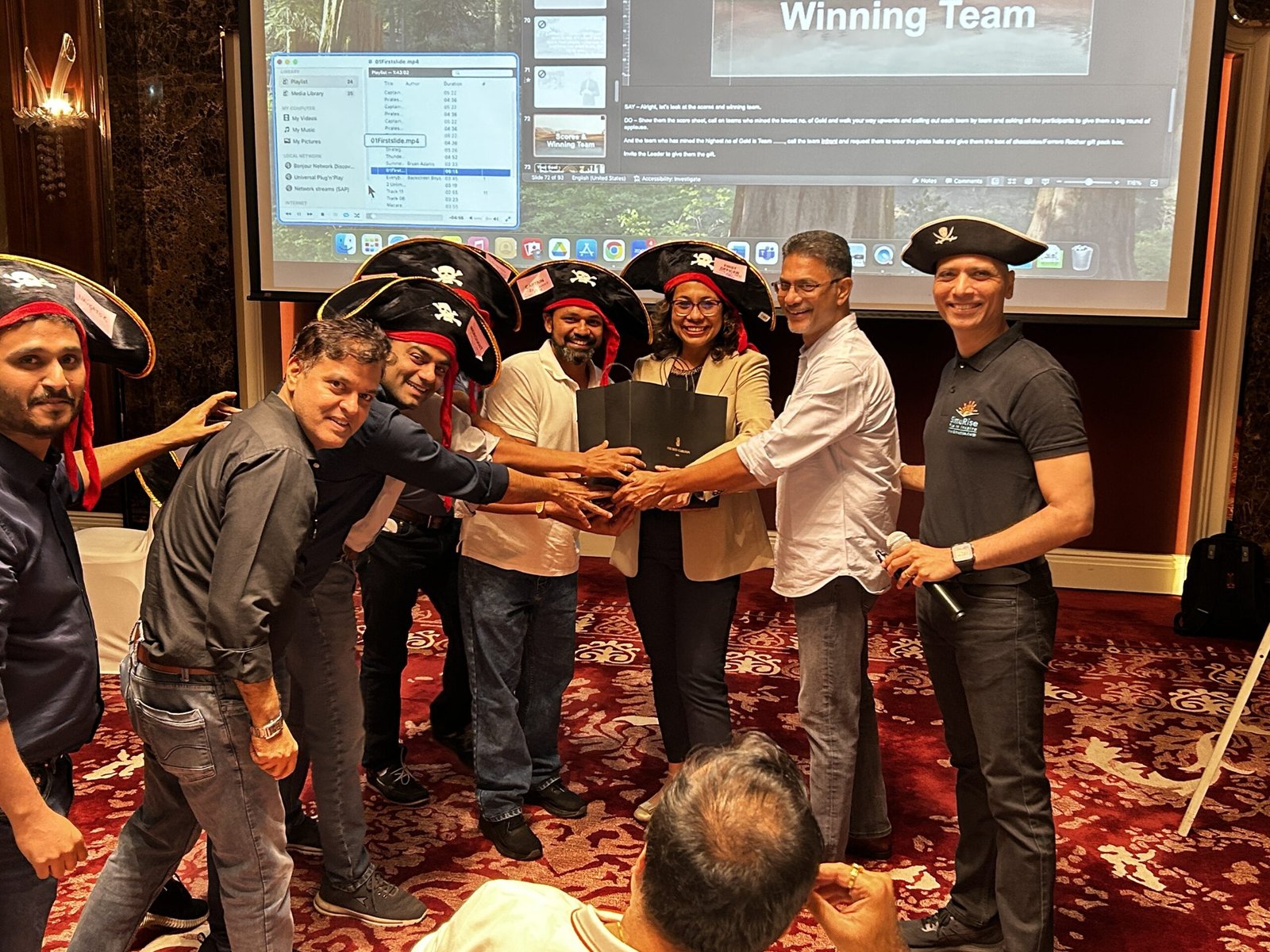
At SimuRise, we enhance leadership capacity through experiential learning, business simulations, and learning-by-doing approaches that catalyse genuine behavioural shifts in leadership.
Our programs develop the ability of leaders and first-time managers to:
- Apply collaboration in realistic contexts
- Enhance communication and decision-making
- Strengthen emotional intelligence
- Lead hybrid and global teams
- Advance conflict resolution
- Improve strategic thinking and focus on execution excellence
- Influence team engagement and cohesiveness
Using simulated learning experiences, immersive simulations, in our leadership development programs, we enable organisations to create leaders of the future to be agile, collaborative leaders engaging others more effectively.
Conclusion
Collaborative leadership is no longer optional; it is the blueprint for how successful organisations will operate in 2026. The leaders who embrace empathy, inclusivity, transparency, and shared ownership will drive higher innovation, stronger engagement, and sustainable long-term growth.
Organisations that invest in developing collaborative leaders, especially first-time managers, will be the ones that thrive in the new world of work.
Maintain adaptability in times of change and disruptive uncertainty
Register your team today by reaching out to us at marketing@simurise.com or call Annie at +91 9082381193 to book your spot.